How to Set Up a 50th Birthday Dessert Table That Looks Expensive
The misconception worth addressing first: an elegant milestone birthday requires renting china or hiring a professional caterer to handle the table setup. It doesn’t. After helping coordinate more than a dozen milestone celebrations — 40ths, 50ths, retirement parties, anniversaries — the most impressive dessert tables I’ve seen used zero real china. What they had was a locked-in color palette, a deliberate layout strategy, and tableware that was actually matched to the occasion.
Cohesion reads as elegance. That’s the whole secret, and it shapes every decision I’ll walk you through below.
What Makes a Birthday Table Look Expensive (And It’s Not the Price)
Every cluttered, overloaded party table I’ve encountered had one thing in common: the host spent money on decorations and ignored the actual table surface. Balloon arches, custom banners, tiered cake stands — none of it compensates for plates that don’t match the napkins, napkins that don’t match the tablecloth, and a tablecloth that clashes with the frosting color. Decoration covers the wall. Tableware is what guests actually hold.
The Color Palette Decision Is the Whole Game
Pick two colors. If you want a metallic accent — gold, silver, rose gold, copper — that counts as your third, and it appears as a highlight only, not as a base. That’s the rule. Three colors maximum, metallic as accent only.
For a 50th birthday specifically, the palettes that consistently look good and are easy to source supplies for:
- Grey and gold — the most versatile option, works equally well for men and women, reads as sophisticated in photos, and coordinates easily with white or black accent elements
- Black and rose gold — striking and dramatic, skews feminine, requires more precise execution to avoid reading as heavy
- Navy and silver — timeless, especially strong for outdoor garden or venue parties
- Sage green and gold — softer and warmer, works beautifully when the venue has natural wood or neutral-toned walls
Once you pick the palette, every single element on that table follows it — plates, napkins, cups, tablecloth, flower arrangements, candles, and the cake design if you can manage it. If something doesn’t fit the palette, it stays off the table. This one rule eliminates most of what makes party tables look messy.
Height Zones and Why the Flat Layer Gets Ignored
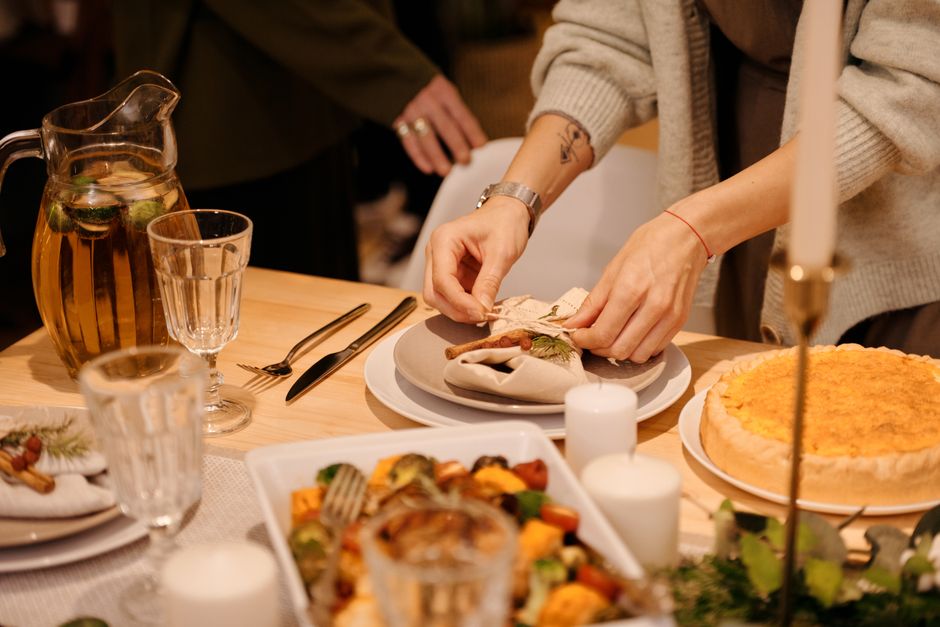
A properly built dessert table operates in three distinct height zones. The tall zone lives at the back: balloon garland, a foam board cutout with the number “50,” a tall floral arrangement, or a printed backdrop banner. The mid-height zone holds the main display pieces — the birthday cake on its stand, tiered cupcake towers, a framed photo of the birthday person. Then there’s the flat zone at the front: plates stacked and ready, napkins fanned out, individually packaged treats, and cutlery.
Most hosts nail the tall zone because it’s visually obvious. The flat zone gets treated as an afterthought, and that’s precisely where the table loses its polish. The flat zone is where every single guest interacts with the setup — they reach in, pick up a plate and napkin, and make an unconscious judgment about the whole party based on what they’re holding. A 7-inch dessert plate in your exact color scheme communicates attention to detail. A generic white plate pulled from the grocery store signals this part didn’t get the same thought as the balloon arch behind it.
The flat zone also gets photographed constantly, without hosts realizing it. Every photo of someone holding a slice of cake includes the plate they’re holding. Every overhead table shot captures the plate stacks and napkin arrangement. This layer shapes how the party looks in photographs for the next twenty years.
Table Size, Spacing, and What Most Tutorials Skip
Know your table dimensions before you buy anything. A standard 6-foot folding banquet table is 30 inches wide. A dessert table set against a wall typically shows 18–24 inches of depth to guests, so everything placed at the back needs to be tall enough to remain visible over the items in front. A 7-inch plate takes up exactly 7 inches of that 18-inch flat zone — two stacks fit side-by-side with room for napkin fans without crowding the surface.
If you’re renting a table, both 6-foot and 8-foot are standard options. An 8-foot table (96 inches long) gives you room for a dedicated plate-and-napkin station at one end, the main cake display at center, and a drinks or favor station at the other end — significantly better than a 6-foot table where everything competes for 72 inches of real estate. For a 50-person celebration, go with 8 feet.
Leave deliberate gaps between display items. Negative space reads as intentional and curated. A table packed edge-to-edge reads as last-minute, regardless of how much each individual piece cost.
Paper Plates vs. Real China at a 50th Birthday: An Honest Comparison
My position, stated directly: for a dessert reception at a milestone birthday with 30 or more guests, premium disposable plates are the better choice. Not as a budget compromise — as the objectively better option for this specific format.
Real china belongs at a sit-down plated dinner. A birthday dessert table is not a sit-down plated dinner. Guests stand, move between conversations, balance a drink in one hand and a plate in the other. Heavy ceramic plates make that harder, and they generate 45 minutes of dish cleanup that pulls the host away from the actual celebration.
| Plate Option | Cost Per Plate | Coordination | Cleanup | Guest Usability | Photo Quality |
|---|---|---|---|---|---|
| Grocery store generic white (50ct, ~$2.99) | ~$0.06 | None — clashes with any palette | Disposable | Buckles under cake weight | Poor — washes out completely |
| Chinet Classic White (30ct, ~$8.99) | ~$0.30 | Neutral only | Disposable | Sturdy, handles food well | Average — clean but generic |
| Hoffmaster Linen-Feel Premium (25ct, ~$12) | ~$0.48 | Limited color options | Disposable | Excellent rigidity, professional feel | Good — visible texture in photos |
| Grey and gold premium party set (75pcs, $8.99) | ~$0.12 | Full palette match, includes napkins | Disposable | Holds cake slice firmly, no wilting | Excellent — actively enhances décor |
| Ceramic rental plates ($0.75–$1.50/plate) | $0.75–$1.50 | Depends on rental stock available | Full washing required | Heavy for standing guests | Best — rarely necessary for this format |
The grey and gold birthday plate and napkin set stands out in this comparison because it solves two problems simultaneously: the plates and napkins coordinate because they’re from the same product line. When you source plates and napkins separately, they almost never match exactly — one runs warm gold, the other yellow-gold. The difference is invisible in packaging and obvious on the table.
There’s also a photography argument nobody talks about. A grey-toned plate with gold foil trim creates a deliberate frame around a slice of dark chocolate cake. A white ceramic plate against a grey tablecloth creates visual mud. If the photos from this party matter — and for a 50th birthday, they do — plate choice is part of your photography strategy, not just your cleanup strategy.
At 75 pieces for $8.99, the set covers a 50-person guest list with enough extra for guests who come back for seconds. That always happens at birthday parties.
Building the 50th Birthday Dessert Table Step by Step
Work from back to front, tall to flat. This order matters — building everything at once leads to repositioning the same pieces three times.
- Lay the tablecloth first. Matte fabric beats shiny polyester — polyester catches every crease and photographs badly in both natural and artificial light. For a grey-and-gold palette, a matte grey or white tablecloth works as the base. Iron or steam it before setup. Visible wrinkles read as neglect regardless of everything else on the table.
- Secure the tall backdrop. Balloon garland, foam board numbers, a printed banner — attach it to the wall or a standalone frame behind the table before placing anything else. This anchors the visual and tells you exactly how much horizontal width you have to work with.
- Center the cake. The birthday cake goes front-center on its stand. Every other element gets positioned in relation to this anchor point. If the cake isn’t centered, the whole table reads as off-balance regardless of how good everything else looks.
- Build out the mid-height zone. Tiered cupcake stands, small floral arrangements, and framed photos of the birthday person go to the left and right of the cake. Keep these lower than the backdrop and shorter than the cake stand so they frame rather than compete with the centerpiece.
- Set the plate and napkin station. Stack plates in groups of 8–10 at the front corners of the table. Fan napkins alongside or tuck them partway under the bottom plate of each stack. With coordinated grey and gold plates and matching napkins, these corner stacks immediately establish the color palette at the exact level guests’ hands reach — the first thing they touch becomes the visual anchor of the whole setup.
- Fill in with desserts. Cake pops, macarons, brigadeiros, brownie bites, petit fours — cluster them on small stands or directly on the cloth in tight groupings. Pre-portion everything. Guests shouldn’t need to cut anything while standing with a drink in one hand.
- Add finishing details last. Gold confetti, small florals, ribbon accents — add these only after the food is on the table. The most common mistake in this final step is over-filling gaps that should stay open. Add less than you think you need, then step back and look at the full table from guest eye level before adding anything else.
For parties where the palette skews playful rather than sophisticated — a colorful tropical theme, a joint celebration mixing kids and adults, a rainbow-scheme party — the colorful dot party plates at $8.99 for 48 pieces deliver a high-energy look that reads as intentional when the rest of the table follows the same direction. Same price point, completely different mood.
The Mistake That Ruins Otherwise Good Tables
Buying plates and napkins from two different product lines that almost match. They look identical in their separate packages. On the table, side by side, the slight difference in grey tone or gold temperature is immediately obvious to anyone who looks. Always buy coordinated sets — plates and napkins from the same package or the same product family. This is not a minor detail. It’s the difference between a table that looks deliberate and one that looks like it almost came together.
When You Should Skip Disposable Plates Entirely
Is this a formal sit-down dinner?
Assigned seats, multiple courses, and table service — rent real china. Local party rental companies offer basic white ceramic plates for $0.75–$1.50 per plate; order 20% over your headcount to cover breakage. Disposable plates at a formal plated dinner signal a budget decision regardless of how nice the plates actually are. If you’re running a hybrid event — cocktail-hour dessert reception followed by a sit-down dinner — use real plates for the dinner portion and coordinated disposable plates for the cocktail station. Both can coexist at the same event without conflict.
Are you serving liquid or saucy foods?
Paper plates fail with liquid. Even the premium, thick-stock structured ones. Curry, soup, chili, saucy pasta — these soak through or collapse the plate structure within minutes. Wax-lined paper bowls handle liquid fine and are widely available at any party supply store. Use them for anything liquid. Doubling up two paper plates doesn’t solve the problem — it just delays it and looks worse.
Is your guest count under 15?
For an intimate celebration — immediate family, a close friend group sitting around one table — your own dishes make more sense. The cleanup is a 20-minute job, the occasion feels more personal, and the tactile difference matters at small scale. Holding a paper plate at a table of 10 feels casual in a way that may not match the occasion. At 40 guests moving through a backyard or living room, nobody notices the material — they notice whether the plate matched the tablecloth and held the food. Reserve the party tableware sets for events where cleanup would otherwise dominate the hour after the celebration ends.
Outside those three scenarios, coordinated disposable tableware is the practical and visually correct choice — and picking the right set is a $9 decision that pays off in every photograph from that day.