Baby Bamboo Pajamas: How to Pick Safe, Soft Sleepwear
Choosing sleepwear for an infant or toddler looks simple until you’re reading three competing fabric certifications at midnight after a diaper change. Bamboo-derived fabrics now dominate the infant sleepwear market for real reasons — but the marketing around those reasons often runs well ahead of the facts. This guide covers what the fabric labels actually mean, what the federal regulations require, and which specific products justify their price tags.
This is not legal advice — consult a licensed attorney if you have specific questions about consumer product safety regulations or retailer liability.
Why Rayon From Bamboo Replaced Cotton as the Default Infant Fabric
For most of the last century, cotton was the standard for infant clothing. Cheap, soft, widely available. The case against cotton isn’t that it’s dangerous — it’s that cotton holds moisture against skin. A sweating infant in a cotton sleeper stays damp, and a damp baby stays colder longer than the room temperature suggests. In a climate-controlled nursery this matters less. During travel, in older homes with uneven heating, or through a fever, it matters considerably more.
Rayon from bamboo is the technically correct name for what most brands market as simply bamboo fabric. It’s made by processing bamboo pulp into a rayon fiber — it is not minimally processed or raw in any meaningful sense. The Federal Trade Commission has issued repeated enforcement actions requiring brands to label this material accurately as rayon from bamboo rather than just bamboo. Any product listing or clothing tag that says only bamboo without specifying the fiber type is potentially non-compliant with FTC labeling rules. That’s a useful filter when you’re comparing options.
Moisture Management: What the Performance Numbers Show
Independent textile testing has generally found that bamboo-derived rayon absorbs and releases moisture at roughly three to four times the rate of comparable-weight standard cotton. For a sleeping infant, this translates to a drier surface against the skin and less temperature swing through the night. Pediatric organizations in the United States have consistently identified overheating as a concern in infant sleep safety — fabric that actively moves heat and moisture away from skin addresses part of that equation, though it is not a substitute for appropriate room temperature management.
Budget polyester blends perform worse than cotton on moisture. They also pill after 15 to 20 wash cycles in most independent testing. Bamboo rayon typically maintains its texture through 40 to 50 normal wash cycles before showing comparable wear. In infant clothing — washed more frequently than almost any other garment category — that durability difference compounds quickly into real value over a single size’s lifespan.
The Hypoallergenic Label: What It Actually Means in Law
Hypoallergenic is not a regulated term in the United States. No FDA or CPSC definition exists that a product must satisfy to carry that label. Any brand can print it on a hang tag. What bamboo rayon does offer that most synthetics don’t is a lower likelihood of pesticide residues — bamboo is grown commercially without synthetic pesticides in most cultivation contexts, unlike conventional cotton, which is among the most pesticide-intensive crops globally.
That said, the chemical processing required to turn bamboo into rayon introduces its own steps. If you want a third-party safety signal, look for OEKO-TEX STANDARD 100 certification. This certification tests the finished fabric for over 100 potentially harmful substances and applies regardless of whether the input fiber is bamboo, cotton, or synthetic. It is a far more meaningful claim than the unregulated word hypoallergenic on a marketing tag.
Fire Safety Rules: The Compliance Detail Most Parents Miss
The Consumer Product Safety Commission mandates that children’s sleepwear in sizes 9 months through 14 years must be either treated with a flame-resistant finish or manufactured as snug-fitting. Bamboo rayon is not inherently flame-resistant. Brands selling bamboo sleepwear rely on the snug-fitting exemption — a garment fitted close to the body won’t trap the air pocket between fabric and skin that accelerates burning in a flame exposure scenario.
Infants under 9 months are exempt from this regulation, which is why 0-6 month sleepwear appears in a wider range of fits and fabric weights. For any size 9 months and up, check the label for one of two specific statements: flame resistant, with the treatment method identified, or snug-fitting, not flame resistant. A label with neither statement is worth a closer look at the brand’s compliance documentation before purchase.
How to Evaluate Any Baby Pajama Before You Buy
Most product listings lead with pattern descriptions and bury the information that actually determines whether a sleeper is worth buying. Here’s what to look for systematically, and what each signal tells you.
| Feature | What to Look For | Red Flag |
|---|---|---|
| Zipper type | 2-way zipper, opens from top or bottom independently | Single-direction only — means full undressing for every diaper change |
| Fabric label | Rayon from bamboo or organic cotton — specific fiber names | Just bamboo with no fiber specification |
| Certification | OEKO-TEX STANDARD 100 or GOTS for organic cotton | Brand-invented certifications with no listed third-party body |
| CPSC compliance | Snug-fitting or flame-resistant statement on label for 9 months+ | No compliance statement in the product listing |
| Closure hardware | Smooth metal or plastic zipper, no exposed snaps on sleeping surface | Decorative buttons that could detach and become choking hazards |
| Care instructions | Machine wash cold or warm, tumble dry low | Hand wash only — impractical given infant laundry frequency |
| Sizing reference | Weight range printed alongside age range | Age range only — sizing varies too much between brands to trust age alone |
Sizing by Weight, Not Age
Baby clothing sizing is not federally standardized in the United States. A size labeled 3-6 months from one brand may fit the same child as a 6-9 month label from another. The weight range, usually printed in smaller text below the age designation — something like 12-16 lbs — is the consistent reference point across brands. Always size by weight.
For bamboo rayon specifically, expect roughly 3 to 5 percent shrinkage on the first warm wash. Pre-wash the garment before first use if you’re at the upper end of a weight range. If you’re buying ahead for a future growth stage, size up by one and store it until needed. Most bamboo rayon garments are labeled accurately enough that one size up is sufficient buffer.
Washing: The Reason Most Bamboo Pajamas Lose Their Softness
The most frequent complaint about bamboo sleepwear — stopped being soft after three washes — has one cause in nearly every case: fabric softener. Liquid fabric softener coats bamboo rayon fibers and destroys their moisture-wicking capacity within three to four wash cycles. The coating also makes the fabric feel heavier and progressively less breathable over time.
Use fragrance-free, dye-free, softener-free detergent for all bamboo sleepwear. Seventh Generation Free and Clear and All Free and Clear both work without degrading the fiber. Tumble dry on low or line dry. High-heat drying repeatedly will shorten the functional life of any bamboo rayon garment faster than washing frequency alone.
Buy in Pairs, Not Singles
It doesn’t matter how good the pajama is. One sleeper is not enough. Infants require changes at unpredictable hours — a single well-chosen sleeper in the wash at 2am solves nothing. The practical unit of infant sleepwear is pairs. Budget accordingly before you decide which product to buy, because the real cost is always at least two units per size.
Jimonda Bamboo Pajamas: Infant Footed vs. Toddler Short Set
Jimonda makes two bamboo sleepwear products that target distinct developmental stages. They are not interchangeable — the right pick depends entirely on your child’s age and mobility level, not personal preference or price alone.
Is the Footed Infant Sleeper Worth $34 for a 3-6 Month Old?
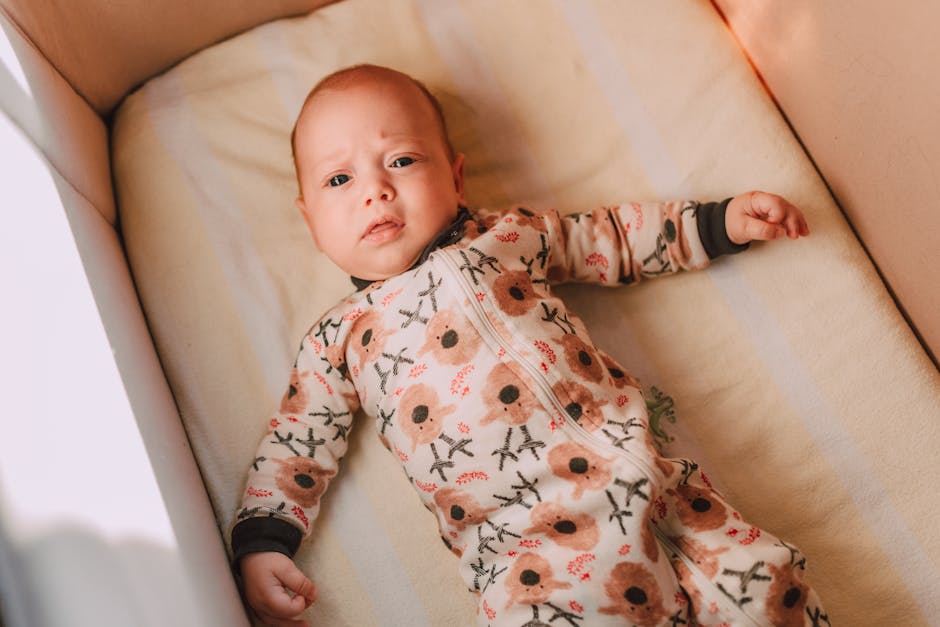
The Jimonda bamboo footed sleeper, priced at $34.19 for the 3-6 month range, uses a 2-way zipper — the feature that justifies most of the price premium over single-direction competitors in this size range. The tie-dye dinosaur pattern is printed directly onto the fabric rather than embroidered, meaning no raised texture against newborn skin and no thread loops that could snag fingers or toes during movement.
At 4.6 out of 5 stars across 207 verified reviews, it holds up well against comparable options. The Carter’s Snug Fit Footie runs $16-22 and meets all CPSC requirements, but uses standard cotton. The Burt’s Bees Baby Organic Cotton Footed Sleeper ($28-32) is a genuine alternative if GOTS-certified organic cotton is your priority over processed bamboo rayon — both fabrics perform at a similar level, with bamboo rayon holding an edge on moisture management and Burt’s Bees holding an edge on fiber processing transparency. The Magnetic Me Organic Cotton Footie ($38-45) adds magnetic closures instead of a zipper, easier to use one-handed in the dark, but at a higher price for hardware rather than fabric quality.
For a pre-crawling infant in the 3-6 month window, the footed design eliminates sock loss entirely and keeps feet at a consistent temperature without additional layers. Once a baby starts pulling to stand — typically around 9-10 months — footed sleepers become a traction hazard on smooth floors. That’s when this style gets retired.
Does the 4-Piece Toddler Set Outperform the Competition at $25?
The Jimonda 4-piece bamboo short-sleeve set for size 2T costs $25.64 and carries a 4.8 out of 5 rating from 246 reviews — the stronger review profile of the two Jimonda products. The set includes two tops and two shorts, giving rotation across two nights without a wash cycle in between.
Short sleeves and shorts in bamboo rayon work well for toddlers sleeping in rooms kept between 68 and 72°F, which is the temperature range most pediatric sleep guidelines recommend. Compare it against the MomStar Bamboo Kids Pajama Set at roughly $27-30, which is two pieces at a comparable price point. Carter’s 4-Piece Loose Fit Cotton Pajama Set costs $20-26 but uses cotton, which has the moisture management limitations discussed earlier. On a combined quality-per-dollar-per-piece basis, the Jimonda set wins this bracket clearly.
- Price per piece: Jimonda short set is $6.41 per piece vs. $34.19 for a single footed sleeper
- Age range: Footed sleeper for 3-6 months; short set for 18 months through 4T
- Review strength: Short set scores higher at 4.8 vs. 4.6, with more reviews (246 vs. 207)
- Mobility fit: Footed for pre-walkers only; short-sleeve separates for walkers and beyond
- Rotation coverage: Short set gives two complete outfits per purchase; footed is a single piece
Clear verdict: for infants under 9 months, the footed sleeper is the right format. For toddlers 18 months and up, the 4-piece short set wins on every measurable dimension — more pieces, lower price, higher rating, and better fit for an active child.
When Bamboo Sleepwear Is the Wrong Call
Bamboo rayon is not a universal upgrade over every other fabric in every situation. Three specific circumstances where a different material is the better choice:
Cold rooms change the equation. If your nursery drops below 65°F overnight — common in older homes with zone heating or drafty windows — bamboo rayon’s breathability becomes a liability. It releases heat efficiently, which is an advantage in a warm room and a disadvantage in a cold one. The Hanna Andersson Organic Cotton Long John Pajama ($36-42) or any quilted cotton sleeper retains warmth better in genuinely cold conditions. Alternatively, layer a sleep sack rated for lower temperatures over bamboo sleepwear rather than switching fabric entirely.
Rapid early growth stages compress the cost math. Infants typically outgrow a size in six to ten weeks during the first year. Spending $34 on a single sleeper used for eight weeks is harder to justify than spending $16-18 on a Carter’s cotton sleeper that meets all the same safety requirements. Courts and regulators have generally found that cheaper doesn’t mean unsafe when CPSC compliance labels are present. Save the bamboo investment for sizes 18 months and up, where a child stays in the same size long enough for the fabric quality to pay off across more wash cycles.
Industrial daycare laundry is a real practical concern. Commercial washing equipment typically runs at higher temperatures with stronger detergents than home machines. If your child’s daycare washes nap clothes on-site, confirm their laundry process before regularly sending bamboo rayon garments. Repeated commercial washing degrades bamboo rayon faster than the care label assumes — the label is written for home laundry conditions, not industrial cycles.
The single most important step before purchasing any infant sleepwear remains the same regardless of brand: verify the CPSC compliance statement, size by weight rather than age, and wash before first use.