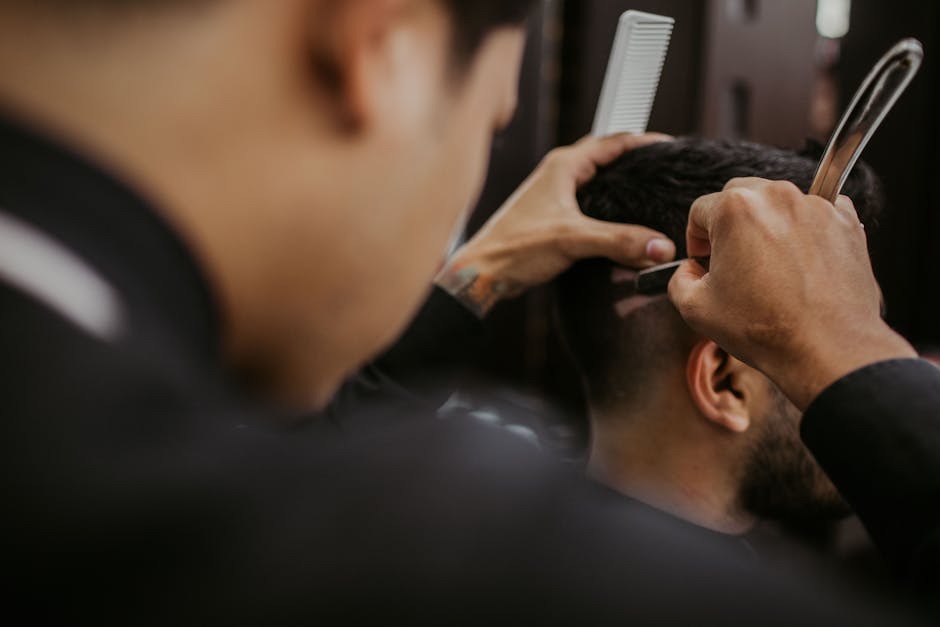
It’s 7:45 a.m. You shave before a job interview. The bathroom mirror shows nothing wrong. Forty minutes later, you’re in a waiting room with a red rash crawling up your jawline, your shirt collar pressing against the worst of it.
That scenario plays out daily for a large portion of regular shavers. Razor burn is not mysterious — it follows predictable mechanical patterns. That predictability means the causes are identifiable, and the fixes are real and repeatable.
The Real Causes of Razor Burn (It’s Not Just Sensitive Skin)
Most people accept “sensitive skin” as an explanation and stop there. Dermatologists typically describe razor burn as a form of mechanical contact dermatitis: friction and micro-trauma disrupt the outermost skin layer, triggering inflammation. Sensitivity raises your threshold for how much disruption your skin tolerates — but it does not cause the disruption itself. Something else does.
Four factors account for the vast majority of cases, and most people are making at least two of these mistakes simultaneously.
Blade Direction and Multi-Pass Damage
Shaving against the grain cuts closer because the blade catches the hair shaft before it can lay back flat. But it also forces the edge to drag more aggressively across skin that hasn’t had a preparatory pass yet. Research on follicular trauma generally shows that against-the-grain first passes increase post-shave inflammation compared to with-the-grain approaches — even when total shave time is identical.
Pass count matters just as much as direction. Every additional pass over the same patch compounds friction. Two passes — one with the grain, one lightly across on areas that need it — is typically the ceiling before you start trading closeness for skin damage. A third pass on a spot that still isn’t close enough is often the direct cause of the rash that shows up an hour later.
Blade Condition: The Hidden Variable Most People Ignore
A dull blade doesn’t just cut less cleanly. It grabs and pulls the hair shaft before cutting, dragging surrounding skin into the cut path. That traction creates microscopic tearing rather than a clean slice. Torn tissue inflames faster than cleanly cut tissue — and that difference shows up as redness within the hour.
Gillette recommends replacing Fusion ProShield cartridges every 5–7 shaves. Schick’s guidance for the Hydro 5 is similar. Most people run blades past ten uses. The blade that “still cuts” past its service life is often the direct cause of persistent razor burn in people who otherwise do everything correctly.
Traditional wet shaving with a double-edge safety razor solves this economically. Replacement blades from Derby, Astra, or Feather cost under $0.20 each. Many wet shavers replace them every two to three shaves. The Merkur 34C ($45 upfront) pays for itself quickly through dramatically cheaper replacements — and fresh blades eliminate the dullness problem at the root.
Pre-Shave Hydration: Before, Not After
Most people reach for aftershave to treat razor burn. That addresses symptoms. Pre-shave hydration is the factor with the most direct preventive effect, and it costs nothing if you already shower.
Dry skin offers more mechanical resistance to a blade. Heat and moisture soften the stratum corneum — the outermost skin layer — and the base of each hair shaft, reducing the cutting force required. Less force means less drag, less trauma, less inflammation. A two-minute warm shower immediately before shaving accomplishes more than any pre-shave oil applied to dry skin.
Cold water has the opposite effect: it constricts surface tissue and increases resistance. Shaving immediately after rinsing your face with cold water is one of the most common technical errors in chronic razor burn cases, and one of the easiest to fix.
A Pre-Shave Protocol That Cuts Irritation Before the Blade Touches Skin
These steps require no new products. The aftershave suggestions at the end are optional additions, not prerequisites. Most people who follow this protocol consistently report improvement within three shaves.
- Shower first, shave after. Two minutes of warm water exposure is worth more than any pre-shave oil on the market. The heat softens the hair shaft and the outer skin layer substantially. A cold shower before shaving has the inverse effect and should be avoided on shave days, or the shave should happen before the cold exposure.
- Use a shaving cream or gel, not aerosol foam. Aerosol foam is largely air. A dense shaving cream or gel — King C. Gillette Transparent Shave Gel ($9) and Taylor of Old Bond Street Sandalwood Cream ($22) are two well-regarded options at different price points — maintains a genuine lubricating film between blade and skin. That film is what reduces friction during each pass.
- Map your grain direction before the first pass. Run your fingertip across your cheek and neck. Where it drags most, that is against the grain. Neck hair commonly grows in two different directions on the same person. Knowing this before the blade moves prevents the instinct to shave uniformly downward on all zones.
- First pass with the grain, second pass lightly across — never a third. Reserve across-the-grain passes for zones that genuinely need closer results after the first pass. No zone should see three passes in a single session.
- Rinse with cold water last. Warm water opens pores throughout the shave; cold water closes them and reduces acute post-shave inflammation. Ten seconds. Widely skipped. Do not skip it.
- Apply an alcohol-free balm, not an alcohol-based splash. Alcohol-based aftershaves sting because they strip moisture from already-stressed skin. Balms containing niacinamide, allantoin, or aloe support the skin barrier rather than disrupting it. Nivea Men Sensitive Post Shave Balm ($7) and CeraVe Moisturizing Cream ($16) are both effective and available at any drugstore.
Blade replacement is not a step in this protocol — it is a standing condition. Replace cartridges at five to seven shaves regardless of whether they still feel sharp. If you notice tugging before cutting, the blade is already past useful life.
When Technique Fixes Aren’t Enough
If two weeks of the protocol above produces no improvement, the problem is likely not technique. Manual cartridge razors require a cutting edge to travel directly across skin. For coarse, curly, or very dense hair — or for skin with pseudofolliculitis barbae (the persistent ingrown-hair condition common in men with tight curl patterns) — that direct mechanical contact is the limiting factor. No adjustment to angle, pass count, or products fully removes it.
Electric foil shavers change the equation. The cutting element never contacts skin directly. A perforated metal screen sits between blade and face. Hair pushes through the holes in the foil; the oscillating blade cuts behind the screen. That design eliminates the direct skin-blade contact responsible for most mechanical razor burn.
| Situation | Recommended Approach |
|---|---|
| Razor burn only on the neck, not the face | Technique fix: adjust grain mapping on neck zones, reduce pass count |
| Razor burn persists after two weeks of correct technique | Switch to an electric foil shaver |
| Pseudofolliculitis barbae (chronic ingrown bumps) | Electric foil shaver — eliminates direct skin contact |
| Coarse or tightly curled facial hair | High-frequency electric foil or rotary shaver |
| Budget under $50, fine hair, infrequent shaving | New cartridge razor plus the pre-shave protocol above |
The Laifen P3 Pro: What the Foil Design Does for Irritated Skin
For daily shavers who have worked through every technique adjustment and still deal with consistent post-shave redness, the Laifen P3 Pro addresses the problem at the mechanical level rather than the technique level — and does so at a price point significantly below the premium foil shaver tier.
Laifen built its reputation on high-RPM motor engineering in their hair dryer line — the Laifen Swift Special is well documented for delivering brushless motor performance at mid-range pricing. The P3 Pro applies the same engineering focus to their foil shaver: a multi-foil head with high-frequency oscillation designed to cut medium-to-coarse hair without the dragging force that cartridge razors require.
Specs and What They Mean for Sensitive Skin
The P3 Pro carries an IPX7 waterproof rating, meaning it is fully submersible and safe for shower use and wet shaving with cream. That capability is more significant than it first appears. Running a foil shaver with a glycerin-based shaving cream gives simultaneous advantages: the no-direct-contact benefit of a foil design plus the lubrication benefit of a cream barrier. Most electric shavers are designed for dry use only. The wet compatibility removes that constraint.
Multiple intensity settings let you reduce motor speed on thinner-skinned zones — the upper lip, under the nose, the jaw angle — while using full power on denser areas like the chin and lower cheeks. Single-speed electric shavers can cause their own form of over-aggressive irritation on those sensitive zones.
USB-C charging reaches a full charge in approximately 60 minutes and delivers around 90 minutes of runtime. That runtime covers roughly two weeks of daily five-minute shaves without needing a recharge. Approximate retail price: $80–100 depending on retailer and regional availability.
Who Should Look at Other Options
The P3 Pro will not match the skin-flush closeness of a fresh double-edge blade or a new cartridge. Foil shavers cut fractionally above the skin surface by design — that fraction is what protects the skin. If maximum closeness is the primary priority and razor burn is secondary, the Panasonic Arc5 ES-LV9Q ($230–260) and the Braun Series 9 Pro ($300–350) offer closer cuts through more advanced multi-blade foil geometry, at significantly higher prices.
Men with fine, sparse facial hair often find cartridge razors give a cleaner result with less setup time. The P3 Pro makes the most sense for medium-to-coarse beard density, people shaving five or more times per week, and anyone who has run through technique adjustments without resolution.
Side-by-Side: Top Shavers for Razor-Prone Skin
| Shaver | Type | Price (approx.) | Best Use Case | Razor Burn Risk |
|---|---|---|---|---|
| Laifen P3 Pro | Foil, wet/dry | $80–100 | Daily shavers, medium-coarse hair, persistent irritation | Low |
| Braun Series 9 Pro | Foil | $300–350 | Dense beards, premium build, 5-element shaving head | Very low |
| Panasonic Arc5 ES-LV9Q | Foil | $230–260 | Closest electric shave available, medium-dense hair | Low–moderate |
| Philips Norelco OneBlade 360 | Hybrid (blade on guard) | $35–50 | Light stubble shaping, occasional use | Moderate |
| Merkur 34C + Feather blades | Double-edge safety razor | $45 + $0.20/blade | Wet shaving, lowest ongoing cost, closest manual shave | Low with technique; high without |
| Gillette Fusion ProShield | Cartridge | $12 + refills | Fine hair, budget-conscious, infrequent shavers | High if technique is poor or blade is dull |
- Budget under $50, fine hair, infrequent shaving: New Gillette Fusion ProShield cartridge plus the pre-shave protocol above. No electric shaver needed.
- Daily shaver, medium-coarse hair, persistent razor burn despite technique work: Laifen P3 Pro. It fills the gap between budget options and the $300-plus Braun tier without cutting the features that matter most for sensitive skin.
- Dense beard, willing to spend at the high end: Braun Series 9 Pro. The 5-element shaving head handles more hair per pass with less drag than any competitor at that price range.
- Closest possible electric shave is the top priority: Panasonic Arc5 ES-LV9Q. Tightest cut of the foil options, though it requires deliberate pressure management on thinner-skinned zones.
- Traditional wet shaving appeal, lowest ongoing blade cost: Merkur 34C with Feather or Astra blades. The learning curve is real, but fresh blades every two or three shaves solve the dullness problem that drives most technique-related razor burn.
The information is for general educational purposes only and does not constitute medical advice. For persistent skin conditions including chronic razor burn, pseudofolliculitis barbae, or folliculitis, consult a licensed dermatologist.
Medical Disclaimer: This content is for informational purposes only and does not constitute medical advice. Always consult a qualified healthcare professional before making health-related decisions.