Is Your Indoor Air Making You Sick? How a Medical-Grade Purifier Can Help
You wake up every morning with a stuffy nose, scratchy throat, and that foggy feeling that no amount of coffee seems to fix. Your doctor says your lungs sound fine. Allergy tests come back mildly positive for dust mites and mold. You keep the house clean, change your sheets weekly, and still — every single morning, the same routine. The problem might not be you. It might be the air inside your home.
According to the EPA, indoor air can be two to five times more polluted than outdoor air. For the roughly 50 million Americans dealing with allergies and the 25 million living with asthma, that statistic is not just alarming — it is a daily health burden hiding in plain sight.
Why Indoor Air Quality Is a Hidden Health Risk

Most people think of air pollution as something that happens outside — smog, car exhaust, factory emissions. But the reality is that the average American spends approximately 90% of their time indoors, and modern homes are designed to be airtight for energy efficiency. That same insulation that keeps your heating bill down also traps pollutants inside with you.
Common Pollutants in American Homes (VOCs, PM2.5, Mold)
The air inside your living room likely contains a cocktail of invisible contaminants:
- Volatile Organic Compounds (VOCs) — Released by furniture, paint, cleaning products, and even scented candles. Formaldehyde, one of the most common VOCs, off-gasses from pressed-wood furniture, cabinetry, and flooring for years after installation.
- PM2.5 (Fine Particulate Matter) — Microscopic particles smaller than 2.5 micrometers that penetrate deep into lung tissue. Sources include cooking, smoking, burning candles, and particles drifting in from outside. Long-term exposure is linked to cardiovascular disease and reduced lung function.
- Mold Spores — Present in any home with even minor moisture issues. Bathrooms, basements, and areas around windows are prime breeding grounds. Mold exposure triggers allergic reactions, worsens asthma, and in severe cases causes chronic respiratory infections.
- Pet Dander and Dust Mites — Microscopic protein particles from pets and dust mite waste become airborne with normal household activity — walking across carpet, sitting on a couch, or making your bed.
- Pollen — Enters through open doors, windows, and on your clothing. During peak seasons, indoor pollen counts can be surprisingly high even with windows closed.
Who Is Most Vulnerable?
Poor indoor air quality affects everyone, but certain groups face disproportionate risks:
- Allergy and asthma sufferers experience direct symptom triggers from airborne particles. A study published in the Journal of Allergy and Clinical Immunology found that reducing indoor PM2.5 levels by just 30% led to measurable improvements in asthma control scores.
- Young children breathe faster than adults relative to their body weight, inhaling more pollutants per pound. Their developing respiratory systems are particularly sensitive to formaldehyde and VOC exposure.
- Elderly individuals often have reduced lung capacity and compromised immune function, making them more susceptible to respiratory infections triggered by poor air quality.
- People working from home now spend even more continuous hours in the same indoor environment, increasing cumulative exposure to whatever is circulating through their HVAC system.
What to Look for in a Medical-Grade Air Purifier
The air purifier market is crowded, and not all devices deliver the same level of protection. Understanding a few key specifications will help you separate genuinely effective machines from marketing noise.
HEPA Filtration Alone Isn’t Enough — Why Formaldehyde Removal Matters
True HEPA filters capture 99.97% of particles down to 0.3 micrometers. That covers dust, pollen, pet dander, and most mold spores effectively. But here is the gap many buyers overlook: HEPA filters do not remove gases and chemical vapors.
Formaldehyde — classified as a Group 1 carcinogen by the International Agency for Research on Cancer — is a gas. It passes straight through even the best HEPA filter. Standard carbon filters can absorb some formaldehyde, but they saturate quickly and stop working, sometimes within weeks in a new home with fresh furniture or recent renovations.
The most effective approach combines HEPA particle filtration with catalytic formaldehyde decomposition technology. Unlike absorption, catalytic decomposition breaks formaldehyde molecules down into water and carbon dioxide permanently. The catalyst does not saturate, which means consistent performance over the life of the unit rather than declining effectiveness as a carbon filter fills up.
Room Coverage, CADR, and Noise Level Explained
Three numbers matter most when comparing air purifiers:
- CADR (Clean Air Delivery Rate) — Measured in cubic feet per minute (CFM) or cubic meters per hour (m³/h), CADR tells you how much filtered air the unit outputs. Higher CADR means faster air cleaning. For a standard living room of 300-400 square feet, look for a CADR of at least 200 CFM.
- Room Coverage — Manufacturers list maximum room size, but this typically assumes the unit running at top speed. For realistic, comfortable operation, choose a purifier rated for a room 20-30% larger than your actual space.
- Noise Level — Measured in decibels (dB). Below 25 dB is near-silent and suitable for bedrooms. 30-40 dB is comparable to a quiet library. Above 50 dB becomes noticeable and potentially disruptive during sleep. The best purifiers maintain strong airflow at low noise levels — a balance that requires serious engineering.
Dreame PM20: A Purifier Built for Health-Conscious Homes
When I started researching the best air purifier for allergies and asthma 2026, the Dreame PM20 kept surfacing in professional reviews and indoor air quality forums for a specific reason: it addresses both particle and chemical pollutants in a single unit without the compromise most purifiers force you to make.
Key Specs and What They Mean for Your Air Quality
The PM20 is not a compact bedroom unit — it is designed as a primary air purifier for health-conscious households that need serious coverage:
- Medical-grade HEPA filtration — Captures 99.97% of airborne particles down to 0.3 micrometers, including dust mites, pollen, pet dander, mold spores, and bacteria.
- Catalytic formaldehyde decomposition — Breaks down formaldehyde at a molecular level rather than simply absorbing it. This is the same technology principle used in hospital and laboratory air systems.
- Large room coverage — Rated for spaces well beyond what compact purifiers can handle, making it suitable for open-plan living areas, combined kitchen-dining spaces, and master bedrooms with attached sitting areas.
- Ultra-quiet operation — Engineered to run at noise levels low enough for overnight bedroom use without disturbing sleep. This matters because air purification works best when the unit runs continuously, not just during waking hours.
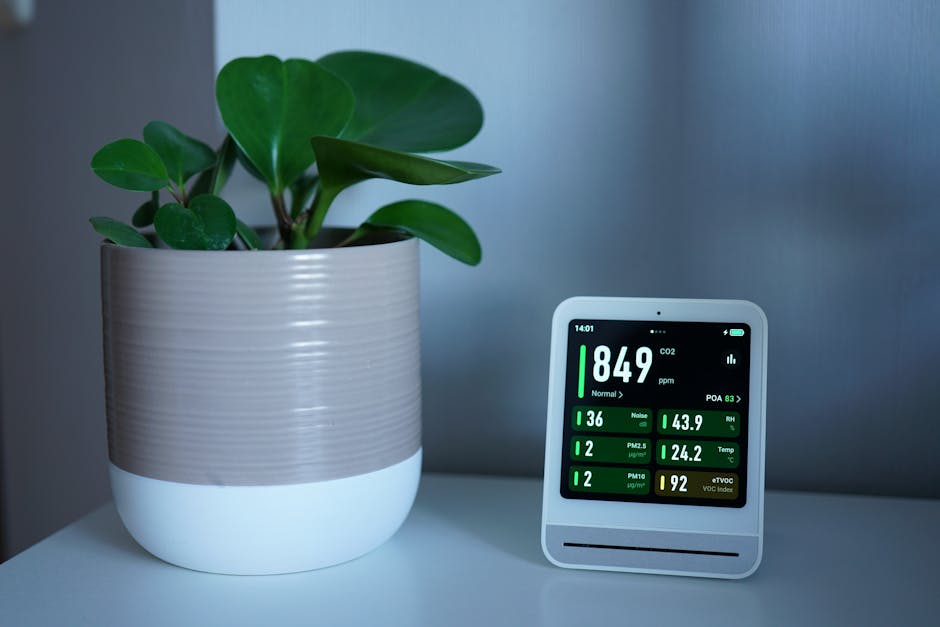
- Real-time air quality monitoring — Built-in sensors display current particle and pollutant levels, so you can actually see when your air quality improves — and when external factors like cooking or opening a window temporarily spike pollutant counts.
Real-World Performance — Large Rooms, Pets, and Seasonal Allergies
Specifications on paper are one thing. What matters is whether you notice a difference when you wake up in the morning.
The PM20 excels in three common scenarios that frustrate allergy and asthma sufferers:
Pet households: If you have dogs or cats, you know that dander is relentless. It embeds in furniture, goes airborne when pets move, and standard HVAC filters barely touch it. The PM20’s high CADR means it cycles room air frequently enough to keep dander concentrations meaningfully lower, not just during the hour after you vacuum.
Seasonal allergy peaks: Spring and fall bring pollen surges that infiltrate even sealed homes. Running the PM20 in your main living space creates a low-pollen zone where you can actually recover from outdoor exposure instead of continuing to react indoors.
New furniture and renovation off-gassing: This is where the formaldehyde decomposition technology earns its price premium. A new sofa, fresh paint, or laminate flooring can off-gas formaldehyde and VOCs for months. The PM20 actively breaks these chemicals down rather than masking them or waiting for a carbon filter to saturate.
At $639, the PM20 sits at the higher end of consumer air purifiers, but it competes directly with units from medical air quality brands costing $800-1,200. For a household where allergies, asthma, or chemical sensitivity affects daily quality of life, the investment addresses a root cause rather than just managing symptoms. Check current price on Amazon.
Do You Need the PM20 or Is the PM10 Enough?
Dreame also makes the PM10, a more compact model that uses the same core filtration technology at a lower price point. Choosing between them comes down to your space and how you plan to use the unit.
Room Size Comparison and Use Cases
The decision framework is straightforward:
- Choose the PM20 ($639) if your primary use is a large living room, open-plan area, or any space over 350 square feet. Also the better choice if you need one unit to handle the main gathering space where family members spend the most waking hours.
- Choose the PM10 ($499) if you are purifying a standard bedroom, home office, or nursery — typically rooms under 300 square feet. It uses the same medical-grade HEPA and formaldehyde decomposition technology in a smaller, quieter package.
Some households benefit from both: a PM20 in the main living area and a PM10 in the master bedroom. This creates two clean-air zones covering the spaces where you spend the most time, especially important for asthma sufferers who need consistent air quality during sleep.
If budget is a primary concern and you need to start with one unit, prioritize the room where you spend the most consecutive hours. For most people, that is the bedroom — making the PM10 a practical starting point. See the PM10 deal.
5 Other Steps to Improve Your Indoor Air Today
An air purifier handles airborne contaminants effectively, but the cleanest indoor environments combine mechanical filtration with behavioral habits. These five changes cost little or nothing and make a noticeable difference:
-
Ventilate strategically. Open windows for 10-15 minutes in the early morning or late evening when outdoor pollen counts and traffic pollution are lowest. Cross-ventilation — opening windows on opposite sides of your home — flushes stale indoor air more effectively than opening a single window.
-
Control humidity between 30-50%. Dust mites thrive above 50% relative humidity. Mold begins growing above 60%. A simple hygrometer (under $15) lets you monitor levels, and a dehumidifier in damp-prone areas like basements pays for itself in reduced mold exposure. Conversely, air that is too dry (below 30%) irritates airways and makes respiratory symptoms worse.
-
Adopt a shoe-free policy. Studies from the University of Arizona found that shoes track in bacteria, pesticides, lead dust, and other contaminants from sidewalks and public floors. Removing shoes at the door eliminates one of the largest single sources of floor-level pollutants, which matters especially in homes with crawling infants or toddlers.
-
Clean with microfiber, not feather dusters. Feather dusters and dry cloths simply redistribute dust into the air. Damp microfiber cloths trap particles and remove them. Vacuum with a HEPA-equipped machine at least twice weekly, focusing on upholstered furniture and rugs where allergens accumulate most.
-
Add a few houseplants — but manage expectations. NASA’s famous clean air study showed that certain plants like spider plants, pothos, and peace lilies can absorb specific VOCs. However, the practical effect in a real home is modest compared to mechanical air purification. Think of houseplants as a small supplementary benefit and a mental health boost, not a replacement for filtration.
Conclusion
Indoor air quality is one of those problems that is easy to ignore because you cannot see it. But if you or someone in your household deals with persistent allergy symptoms, asthma flare-ups, or unexplained congestion, the air inside your home deserves serious attention. Combining a medical-grade air purifier like the Dreame PM20 with simple habits — better ventilation, humidity control, regular cleaning — creates an indoor environment where your respiratory system can actually rest and recover. The goal is not a sterile hospital room. It is a home where breathing feels effortless, especially for the people who need that most.