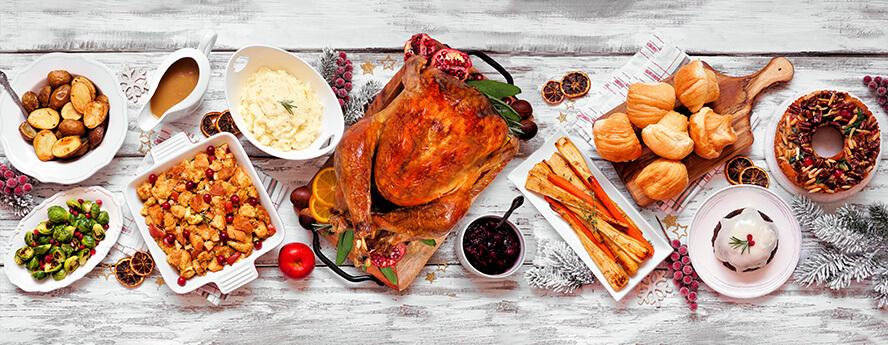
You know the drill by Christmas afternoon: bloated, sluggish, and wondering if the third slice of Yule log was worth it. It doesn’t have to be that way. The problem isn’t Christmas food itself — it’s that most traditional dishes lean hard on butter, sugar, and refined flour. You can keep the feast and still feel human the next morning. Here are five foods that earn a real spot on a healthy Christmas table, with zero apology and no side of guilt.
1. Roasted Brussels Sprouts — The Vegetable That Actually Gets Better
Brussels sprouts are the comeback story of the decade. Twenty years ago they were boiled into gray mush and served as punishment. Now they’re the first thing to disappear from the serving dish. The secret is roasting at high heat until the outer leaves char and the inside stays tender.
A single cup of roasted Brussels sprouts gives you 4 grams of fiber, more vitamin C than an orange, and a solid dose of vitamin K for bone health. The bitter compounds (glucosinolates) — the ones that made you hate them as a kid — are reduced by roasting. They become sweet, almost nutty.
How to make them disappear at your table: Toss trimmed sprouts with olive oil, salt, and pepper. Roast at 425°F for 20-25 minutes, flipping halfway. Add a drizzle of balsamic glaze and a sprinkle of flaky salt right before serving. That’s it. No bacon required (though it doesn’t hurt).
Common mistake: Overcrowding the pan. If sprouts are stacked, they steam instead of roast. Use two pans if needed. Crowded sprouts = soggy sprouts.
Why Brussels sprouts beat every other Christmas vegetable
Green bean casserole is a cream-of-mushroom-soup delivery system. Glazed carrots are sugar bombs. Brussels sprouts bring actual vegetable nutrition without the junk. They’re the one side dish everyone can agree on, even the picky eaters.
2. Wild Salmon — The Centerpiece That Won’t Put You to Sleep
Ham and roast beef are Christmas classics, but they’re also heavy. A 6-ounce serving of roasted ham can pack 1,500 mg of sodium — two-thirds of your daily limit. Add the sides and you’re drowning in salt. Salmon flips the script.
A 4-ounce fillet of wild sockeye salmon delivers 34 grams of protein, 1.5 grams of omega-3 fatty acids (EPA and DHA), and significant vitamin D — something most of us are deficient in during winter. The fat profile keeps you full without the lethargy that comes from a heavy red meat meal.
For the best results: Buy wild-caught Alaskan sockeye or coho, not Atlantic farmed. The color is deeper, the flavor cleaner, and the omega-3 content is about 30% higher. Price runs $12-18 per pound for frozen fillets at Costco or Whole Foods. Fresh runs higher.
Simple preparation: Pat the fillet dry. Season with salt, pepper, and a light dusting of smoked paprika. Roast at 400°F for 12-15 minutes for medium (still translucent in the center). Serve with lemon wedges and fresh dill.
When not to serve salmon: If half your guests genuinely dislike fish (not just “I’m not in the mood”), don’t force it. Make it an option alongside a smaller ham or roast. The point is to give people a lighter choice, not to dictate their plate.
3. Pomegranate Seeds — The Dessert That Doubles as a Superfood
Pomegranate seeds are nature’s candy, and they belong on every Christmas table for one simple reason: they require no cooking, no sugar, and no effort. Just cut, deseed, and serve. A half-cup of arils contains 7 grams of fiber, more antioxidants than green tea or red wine (by ORAC score), and about 70 calories.
The polyphenols in pomegranate seeds — specifically punicalagins — have been shown in multiple studies to reduce oxidative stress and inflammation. That’s exactly what your body needs after a heavy meal.
How to use them: Sprinkle over a salad of arugula, goat cheese, and walnuts. Mix into plain Greek yogurt for a quick dessert. Or just put a bowl on the table and let people eat them by the handful. They stain clothes, so warn guests. Worth it.
Buying tip: A whole pomegranate costs $2-4 and yields about a cup of seeds. Pre-packaged seeds are convenient but run $5-7 for 6 ounces and often sit on the shelf longer. Whole fruit keeps for weeks in the fridge. Deseed it yourself an hour before serving.
The one thing nobody tells you about deseedings
Cut the fruit in half horizontally. Hold it cut-side down over a bowl and whack the back with a wooden spoon. The seeds fall out in about 30 seconds. No digging, no broken fingers. Works every time.
4. Dark Chocolate (70% or Higher) — The Only Dessert Worth the Calories
I’m not here to tell you to skip Christmas cookies. I’m here to tell you that a square of good dark chocolate after dinner will satisfy your sweet tooth with less sugar, more flavor, and actual health benefits. The key is the percentage.
Dark chocolate with 70% cocoa or higher contains flavanols — compounds that improve blood flow, lower blood pressure, and reduce LDL oxidation. A 1-ounce serving (about 3 squares) has roughly 170 calories, 12 grams of fat (mostly stearic acid, which doesn’t raise cholesterol), and 7 grams of sugar. Compare that to a single frosted sugar cookie: 120 calories, 10 grams of sugar, zero nutrients.
Which bars to buy: Look for brands that list cocoa mass as the first ingredient, not sugar. Good options include Alter Eco Dark Blackout (85%, $4.50), Lindt Excellence 90% ($3.50), and Hu Kitchen Simple Dark (70%, $5.00). Avoid anything with “alkalized” or “Dutch-processed” cocoa — that process destroys most of the flavanols.
Serving suggestion: Break the bar into small squares and arrange on a board with fresh raspberries, a few almonds, and maybe a pinch of flaky sea salt. It looks intentional and feels special. Nobody will miss the store-bought tin cookies.
The trap: “Dark chocolate” that’s actually 50% cocoa with sugar as the first ingredient. That’s just candy. Read the label. If sugar is listed before cocoa, put it back.
5. Spiced Nuts — The Snack That Keeps You from Grazing on Trash
Christmas snacking is a minefield. Cheese platters, crackers, chips, and those little sausage rolls that disappear before you realize you’ve eaten six. Spiced nuts are the countermeasure. They’re satisfying, nutrient-dense, and take about 20 minutes to make from scratch.
A quarter-cup of almonds provides 6 grams of protein, 3.5 grams of fiber, and 200 calories. Walnuts add ALA omega-3s. Pecans bring manganese and copper. The spice coating adds flavor without the sugar load of commercial candied nuts.
Simple spiced nut recipe:
- 2 cups mixed raw nuts (almonds, walnuts, pecans)
- 1 tablespoon olive oil
- 1 teaspoon smoked paprika
- 1/2 teaspoon cayenne (skip if serving kids)
- 1/2 teaspoon salt
- 1 tablespoon maple syrup (optional — adds 4g sugar per serving)
Toss everything together. Spread on a baking sheet. Roast at 350°F for 12 minutes, stirring halfway. Let cool completely before serving. They’ll stay crisp for a week in an airtight container.
What to avoid: Commercial “lightly salted” nuts that are actually roasted in cottonseed oil and dusted with sugar. Check the ingredient list. You want nuts, oil, salt, spices. That’s it. No maltodextrin, no “natural flavors,” no corn syrup.
Why homemade beats store-bought every time
Store-bought spiced nuts from brands like Blue Diamond or Emerald cost $6-8 for a 6-ounce can. Homemade costs about $4 for twice the volume. You control the salt and sugar. And they taste better because they’re fresh from the oven.
6. The One Food to Skip (and What to Swap It With)
This isn’t a “healthy foods” list without an honest counterpoint. The single worst item on most Christmas tables is the store-bought cheesecake or the pre-made dessert platter from the grocery bakery. These things are engineered to be cheap, shelf-stable, and addictive. They’re not food in any meaningful sense.
A single slice of Sara Lee New York Style Cheesecake (1/8 of the cake) contains 350 calories, 24 grams of fat, and 26 grams of sugar — 19 of which are added sugar. The ingredient list starts with cream cheese and sugar, then drops into modified corn starch, guar gum, and artificial flavor. There’s nothing wrong with dessert. There’s something wrong with dessert that has zero redeeming nutritional value and costs $7 for a 32-ounce slab of processed dairy product.
The swap: Make a simple panna cotta with full-fat coconut milk, vanilla bean, and a touch of maple syrup. It takes 10 minutes of active work, sets in 4 hours, and tastes luxurious. Or serve the dark chocolate from section 4 with fresh berries. Either option costs less, tastes better, and won’t spike your blood sugar into orbit.
| Food | Calories (per serving) | Sugar (g) | Fiber (g) | Protein (g) | Cost per serving |
|---|---|---|---|---|---|
| Store-bought cheesecake slice | 350 | 26 | 0 | 5 | $1.50 |
| Roasted Brussels sprouts (1 cup) | 85 | 3 | 4 | 4 | $0.60 |
| Wild salmon fillet (4 oz) | 220 | 0 | 0 | 34 | $3.00 |
| Pomegranate seeds (1/2 cup) | 70 | 12 | 7 | 1 | $0.75 |
| Dark chocolate 85% (1 oz) | 170 | 7 | 3 | 3 | $0.75 |
| Spiced nuts (1/4 cup) | 200 | 2 | 3.5 | 6 | $0.50 |
The numbers don’t lie. Every item on this list delivers more nutrients per calorie than the standard Christmas dessert spread. That’s not a moral judgment — it’s a math problem. You can eat well, enjoy the holiday, and wake up on December 26 feeling like a human being instead of a stuffed turkey.
No single meal determines your health. But the pattern of three heavy meals plus grazing over a week of holiday parties adds up. Picking even two or three of these foods to feature on your table shifts the balance in your favor. That’s the whole point.
Medical Disclaimer: This content is for informational purposes only and does not constitute medical advice. Always consult a qualified healthcare professional before making health-related decisions.