Outdoor grilling can make an ordinary meal feel like an occasion. It also gives you plenty of ways to cook a varied, satisfying dinner without building everything around sausages, oversized burgers or heavy sauces. The most useful approach is to plan for the grill itself: choose foods that cook well together, manage the heat carefully and organise serving so that everyone can enjoy the meal while it is fresh.
Build a menu that works over the heat
Start with a manageable combination: a protein food, vegetables that hold their shape and a filling accompaniment. You do not need to cook every part outdoors. A bowl of wholegrain bread, a bean salad or cooked grains prepared in the kitchen can leave more grill space for foods that benefit from browning.
Think about cooking times before choosing ingredients. Thick chicken pieces and thin courgette slices need different treatment. If everything goes on together, some foods may burn while others remain undercooked. Choose similar sizes within each batch and plan to cook in stages.
- Pair fish with thick slices of courgette and a potato salad prepared separately.
- Serve tofu with peppers and mushrooms, with rice or bread alongside.
- Cook lean meat with aubergine wedges and add a simple lentil side.
- Offer grilled vegetables in wraps with beans and a dressing served separately.
These are starting points, so adapt them to your appetite, dietary needs and the ingredients you already have. If a health condition requires changes to your diet, ask your GP or a registered dietitian for advice that fits your circumstances.
Give vegetables enough space and attention
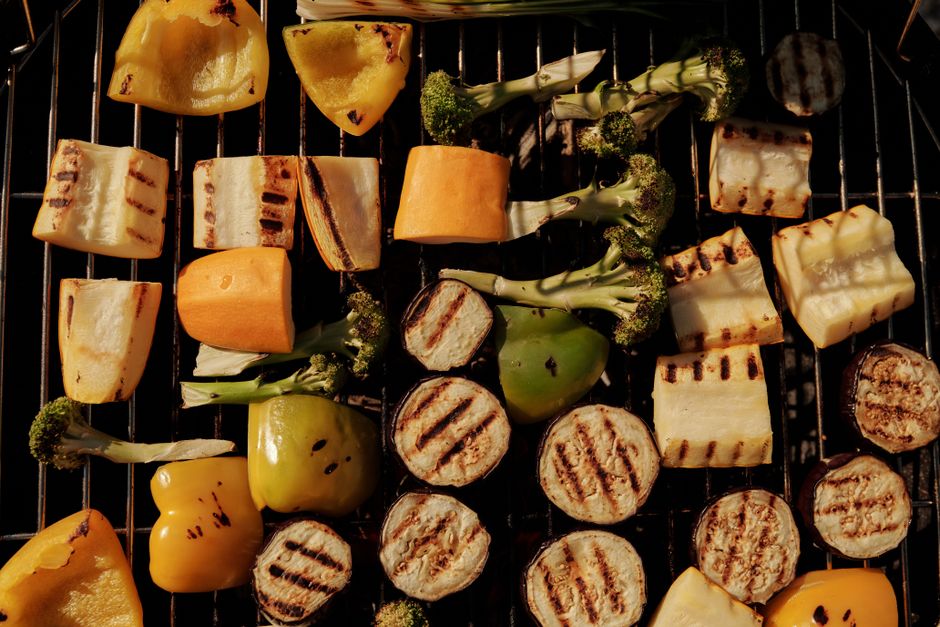
Vegetables are easier to enjoy when they are cooked deliberately rather than squeezed into the last available corner. Peppers, courgettes, aubergines, mushrooms and corn offer different textures and can form a substantial part of the meal. Wash produce before preparing it and cut pieces large enough to handle safely.
Match the cut to the vegetable
Wide slices are easier to turn than small cubes. Keep slices reasonably even so they cook at a similar pace. A grill basket can help contain smaller pieces; use equipment intended for your grill and follow its instructions. For skewers, group ingredients with similar cooking needs instead of alternating foods simply for appearance.
Brush vegetables lightly with oil rather than pouring it over them. Turn them as needed and move them away from strong heat if their surfaces darken before the centres soften. Aim for tender vegetables with some browning, without leaving them over flames until blackened.
Choose protein foods with cooking in mind
Fresh meat, poultry, fish, tofu and suitable bean-based patties can all have a place at an outdoor meal. Rotating between them adds variety. Choosing unprocessed options more often also gives you greater control over seasoning than relying on sausages and heavily seasoned prepared burgers.
Trim excess visible fat from meat where practical, and avoid pressing burgers onto the grate. Pressing pushes out juices and can encourage drips and flare-ups. Handle fish gently with a suitable spatula or fish basket. For tofu, drain it and pat the surface dry before adding a little oil and seasoning.
Plant-based does not automatically mean a prepared product meets your needs. If you buy ready-made patties or marinated foods, check the ingredients, allergens, salt content and cooking instructions. Some products need thorough cooking even when they look ready to eat.
Use flavour without letting sauces dominate
A simple marinade can bring together oil, lemon juice or vinegar, herbs and spices. Garlic, paprika, cumin and black pepper offer different directions, so choose a small combination rather than adding everything. Acidic marinades add flavour but do not make raw meat safe to eat.
Marinate perishable foods in the fridge in a covered, food-safe container. Set aside a clean portion of sauce before it touches raw ingredients if you want some for serving. Discard leftover marinade that has been in contact with raw meat or fish.
Sweet glazes can catch quickly over direct heat. Use them sparingly towards the end of cooking, following any product instructions. Serve other sauces at the table so people can choose how much they want. Fresh herbs or a squeeze of lemon can finish a dish without requiring a thick coating.
Control the heat instead of chasing grill marks
Grill marks do not tell you whether food is cooked safely. Set up a hotter area for initial browning and a gentler area for finishing food, where your grill design allows. Follow the manufacturer’s instructions for lighting, preheating and adjusting the heat.
Keep food away from persistent flames. If fat causes a flare-up, move the food to a cooler section when it is safe to do so and manage the grill according to its instructions. Do not keep cooking over flames for a darker finish. Remove burnt portions rather than treating blackened edges as the goal.
Use a clean food thermometer to check foods that need thorough cooking, following the safe temperature guidance on the packaging or from your local food safety authority. Check the thickest part without touching bone, and clean the probe between uses. Colour, firmness and clear juices alone are not reliable checks.
Arrange the outdoor space for safe food handling
A little organisation prevents hurried decisions once cooking begins. Keep raw ingredients chilled until needed, and bring out small batches rather than leaving the whole supply beside the grill. Keep chilled salads and dips refrigerated until serving, too.
- Prepare clean plates and utensils for cooked food before lighting the grill.
- Keep raw meat, poultry and fish separate from vegetables and ready-to-eat foods.
- Wash your hands with soap and water after handling raw ingredients.
- Use separate utensils for raw and cooked food, or wash them thoroughly between tasks.
- Keep serving dishes covered where practical and protect them from insects.
Do not return cooked food to a plate that held raw ingredients. If guests have food allergies, discuss ingredients and shared cooking surfaces before preparing the meal. A separate utensil alone may not prevent contact on a shared grill.
Serve in small rounds and finish with a clear plan
Cooking in rounds helps when grill space is limited. Put out a modest amount of ready-to-eat food, then replenish it with fresh portions. This makes it easier to keep hot foods hot and chilled foods cold, while giving you room to cook without crowding the grate.
Keep water available and provide a shaded place to sit. Allow everyone to serve themselves according to appetite, with vegetables, protein foods and accompaniments within easy reach. An outdoor meal can be relaxed without needing an endless supply of snacks while the main food cooks.
Refrigerate perishable leftovers promptly in shallow containers; do not wait for the gathering to end. Follow local food safety guidance on storage times, especially in hot weather, and discard food if you are unsure it has been kept safely. Once the grill has cooled, clean it according to its instructions. A tidy cooking area and a simple menu make the next outdoor meal easier to organise.