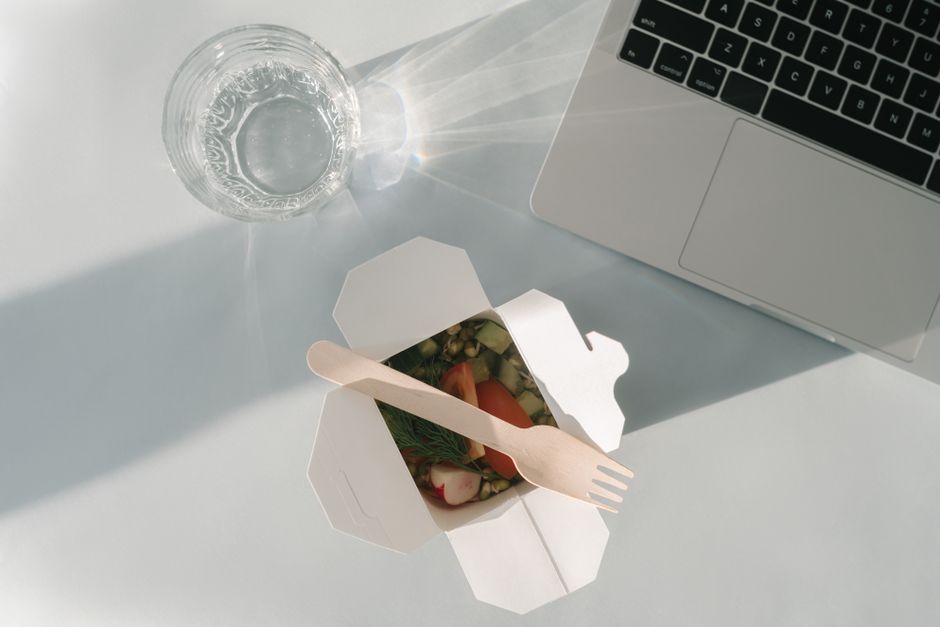
Working from home puts your kitchen within easy reach, but that does not always make eating well straightforward. Meetings can swallow your lunch break, household jobs can interrupt meals, and a trip for a drink can turn into distracted grazing. A useful approach is to give food a clear place in your working day. You do not need strict rules or elaborate cooking: you need a few arrangements that still work when your inbox is full.
Give meals space in your calendar
Without a commute or colleagues heading out for lunch, the day can lose its natural pauses. Before you begin work, look at your appointments and decide where a meal break can realistically fit. Protect that space as you would another ordinary commitment. If your schedule changes, move the break deliberately instead of letting it disappear.
Keep timing flexible enough to reflect your appetite and responsibilities. A calendar reminder is an invitation to check what you need, rather than an instruction to eat regardless of hunger. Equally, being busy is not a reason to keep postponing food when you are hungry. If meetings regularly overlap lunch, discuss a workable break with your manager or team.
Prepare for the workday you actually have
Being at home does not mean you have time to cook during working hours. Plan lunch around the gap you can count on, including the time needed to prepare, eat and clear up. A meal requiring several pans may be enjoyable on a quiet day and completely impractical between calls.
Match preparation to your available attention
- For a brief break: keep ingredients ready for a sandwich, wrap or cold assembled meal.
- For a predictable lunch window: use a meal that needs only straightforward reheating or a small amount of cooking.
- For an uncertain schedule: choose something you can leave safely refrigerated until you are ready to eat.
Make these choices before a demanding stretch of work. That might mean putting lunch ingredients together while preparing breakfast, or setting aside part of dinner for the following day. The aim is to reduce decisions at lunchtime, rather than turn the evening into another shift of kitchen work.
Create a lunch spot separate from your desk
When your desk becomes the place for everything, eating can blend into typing, scrolling and answering messages. Choose another spot for meals where possible, even if it is simply the other end of a small table. Close the laptop or move your plate away from work materials so the break has a visible beginning.
You do not need a perfect dining area or a completely silent house. Put food on a plate or in a bowl, sit comfortably and give yourself some time to notice its taste and whether you want more. If you have to eat near your workstation, silencing notifications and turning away from the screen can still create a useful boundary.
Make the kitchen easy to use between calls
A kitchen that is technically available can still be difficult to use if the counter is crowded and the clean containers are missing. Leave a small preparation area clear and keep everyday lunch equipment accessible. Group ingredients that you commonly use together, while following their storage instructions.
Keep ordinary convenience foods in the picture. Frozen vegetables, canned beans, bread and ready-to-eat ingredients can help you assemble a varied lunch without starting from scratch. Choose foods you enjoy and can use across different meals. There is no need to make every component yourself to justify taking a proper lunch break.
If you share the kitchen, agree on a little space for workday food. A labelled container or designated fridge shelf can prevent your lunch ingredients becoming someone else’s snack. This is especially useful when several people work from home or family members arrive hungry before your working day ends.
Respond to grazing without making food a test
Frequent kitchen visits may reflect hunger, boredom, a difficult task or simply the need to leave your chair. When you notice yourself wandering over, pause briefly and ask what would help. If you are hungry, eat. If you want a break, you could step outside or spend a moment away from your screen.
Sometimes you want food and a break, and that is fine too. You do not have to prove that your hunger is real before you are allowed to eat. The useful distinction is whether the choice feels deliberate or happens while your attention is elsewhere. Avoid treating snacks as a failure or compensating by skipping the next meal.
If you regularly feel hungry soon after lunch, consider whether the meal was substantial enough for you. Adding another component or serving more may be more helpful than trying to resist hunger all afternoon. Appetite varies between people and from day to day.
Keep drinks within your working routine
Put a glass or mug somewhere stable and away from electrical equipment. Refill it during an existing pause, such as finishing a call or returning from the bathroom. Water is a simple option, and other drinks can fit your preferences. You do not need a complicated tracking system to remember that drinks belong in your day.
Notice whether making coffee has become your only way to step away from work. You can keep the break while sometimes choosing another drink. If you have been given advice about fluids or caffeine because of a health condition, medication or pregnancy, follow that guidance and ask your GP or pharmacist if you are unsure.
Keep food safe when work interrupts
Prepare food with clean hands and equipment, and keep raw ingredients separate from ready-to-eat foods. Follow storage, cooking and reheating instructions on packaging. Refrigerate perishable ingredients and leftovers promptly rather than leaving them beside your computer while a meeting runs on. Reheat only when you are ready to eat.
Do not rely on an uninterrupted afternoon to remember food that needs putting away. Make clearing up part of the meal break, and use a reminder if distractions are common. If you are uncertain whether food has been stored safely, avoid guessing based only on its appearance or smell.
Finish with a routine you can repeat
At the end of work, take a moment to notice what made eating awkward. Was lunch too complicated, the break too short, or the fridge missing something useful? Change that specific obstacle for tomorrow. A simple default lunch and a protected pause may do more for your routine than a long list of intentions.
Keep your approach supportive rather than restrictive. If eating is causing persistent distress, or a health condition affects what or when you can eat, speak with your GP or a registered dietitian. Your home working routine should make it easier to feed yourself and return to the day with a little more space.