Roughly 70% of American adults eat breakfast that fails to hit the 20-gram protein mark. That is not a random statistic pulled from a diet blog. It shows up in USDA dietary surveys, and it explains why so many people feel like they need a nap at their desk before lunch. The problem is rarely that you lack willpower. The problem is that your breakfast is structurally designed to spike your blood sugar and drop it an hour later.
This is not legal advice. It is, however, a breakdown of what actually works for building a breakfast that keeps you functional until noon. We are going to look at the mechanics of satiety, the specific foods that solve the problem, and the common mistakes that make healthy breakfasts fail. No affiliate links. No miracle powders. Just food.
The Satiation Equation: Why Your Current Breakfast Fails
Most people think a healthy breakfast means eating less. That is backwards. A healthy breakfast means eating enough of the right things to switch off your hunger hormones for four to five hours. The three levers you control are protein, fiber, and liquid calories.
Protein is the heavy hitter. It triggers the release of peptide YY and GLP-1, two hormones that tell your brain you are full. A breakfast with 8 grams of protein—like a plain bagel—leaves those hormones mostly silent. A breakfast with 30 grams of protein, like three eggs with Greek yogurt, sends a clear signal. Fiber works differently. It slows gastric emptying, which means food physically stays in your stomach longer. Soluble fiber from oats or chia seeds forms a gel that stretches the stomach wall and activates stretch receptors. That is a mechanical signal of fullness, not a chemical one.
Liquid calories are the quiet saboteur. A 16-ounce glass of orange juice has about 220 calories and zero fiber. Your body processes it in under 30 minutes, and your blood sugar spikes, then crashes. The same calories from a bowl of oatmeal with nuts would take hours to digest. The form of the food matters as much as the calorie count.
The 20-30-8 Rule
Here is a practical starting point: aim for at least 20 grams of protein, 30 grams of carbohydrate from whole-food sources, and 8 grams of fiber. That combination, in most people, produces a steady energy curve. You can adjust up or down based on your body size and activity level, but that baseline fixes the majority of mid-morning crashes.
Why Timing Matters Less Than Composition
Intermittent fasting advocates will tell you to skip breakfast entirely. That works for some people. But if you are someone who wakes up hungry and tries to power through, you are fighting your own cortisol rhythm. Cortisol is naturally highest in the morning, and adding hunger stress on top of that can make you anxious and unfocused. If you eat breakfast, composition beats timing. A 7 AM breakfast with 25 grams of protein beats a 9 AM breakfast with 10 grams.
Five Breakfast Archetypes That Actually Work
You do not need a new recipe every day. You need five reliable templates you can rotate. Each one below hits the 20-30-8 baseline and takes under ten minutes to prepare, with one exception for the weekend.
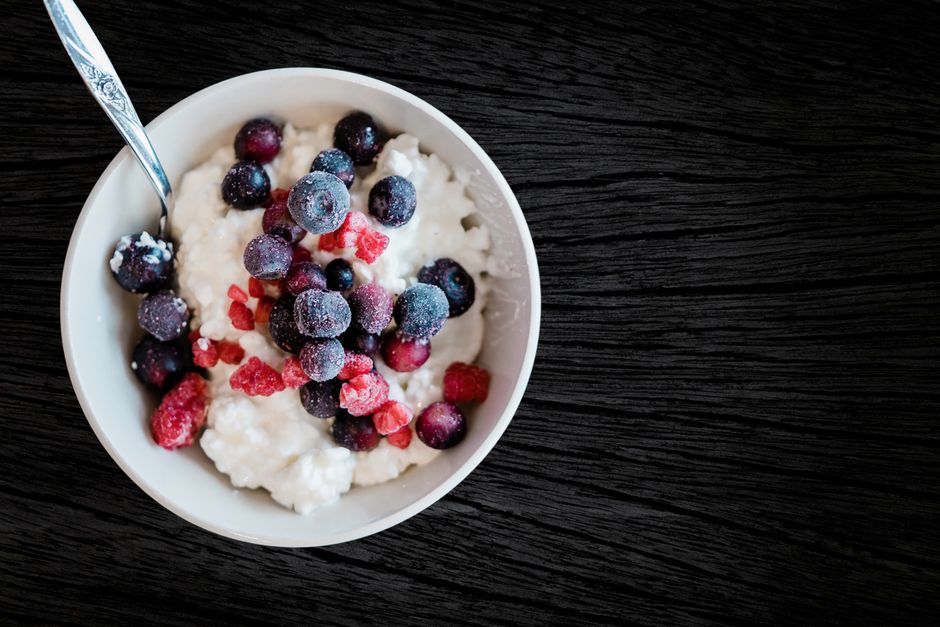
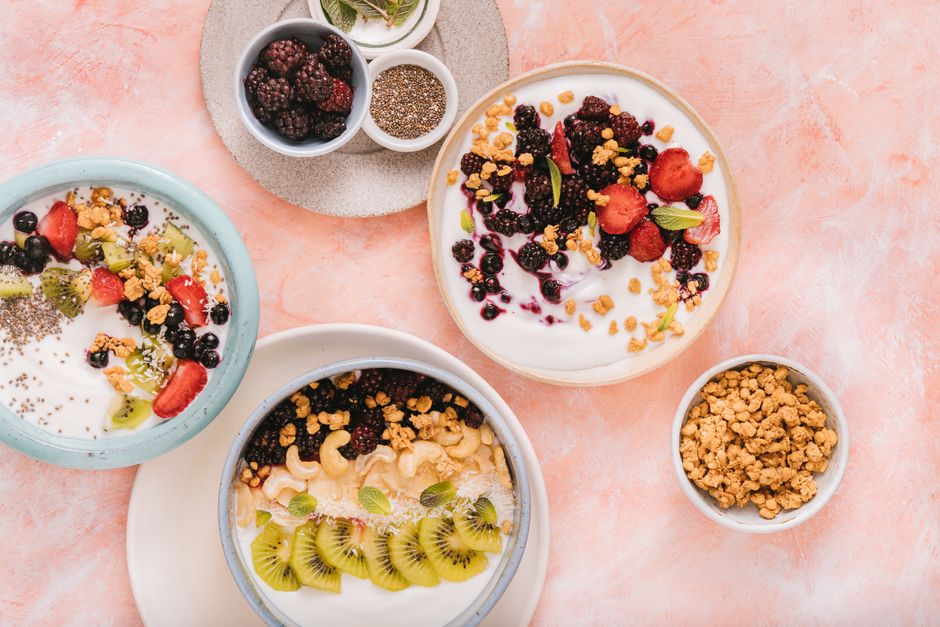
- The Greek Yogurt Bowl: One cup of Fage 5% Greek yogurt (18g protein) plus 2 tablespoons of chia seeds (4g fiber) plus half a cup of raspberries (4g fiber) plus a small handful of walnuts. Total: 22g protein, 12g fiber. If you want more protein, add a scoop of unflavored collagen peptides. It dissolves completely and adds 10g of protein without changing the texture.
- The Savory Egg Plate: Three large eggs scrambled with a cup of spinach and a quarter cup of black beans. That is 21g protein and 7g fiber. Add a slice of Ezekiel 4:9 sprouted grain toast for another 4g protein and 3g fiber. This is the breakfast for people who hate sweet food in the morning.
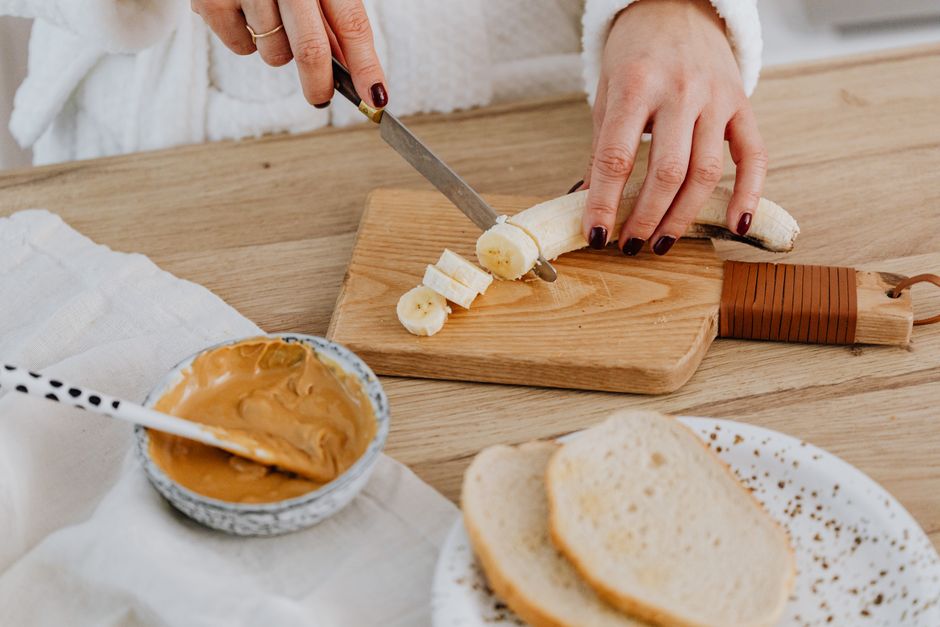
- The Overnight Oats Upgrade: Half a cup of rolled oats, half a cup of Fairlife ultra-filtered milk (13g protein per cup), 2 tablespoons of peanut butter, and a tablespoon of chia seeds. Stir it the night before. In the morning, top with half a sliced banana. Total: 24g protein, 10g fiber. The Fairlife milk is the trick—it has 50% more protein than regular milk.
- The Cottage Cheese Toast: Half a cup of Good Culture 4% cottage cheese (14g protein) spread on two slices of Dave’s Killer Bread Thin-Sliced Powerseed (6g protein, 6g fiber total). Top with sliced tomatoes, salt, and pepper. Total: 20g protein, 8g fiber. This takes four minutes.
- The Weekend Protein Pancake: One cup of Kodiak Cakes Buttermilk Power Cakes mix (14g protein) made with one egg and half a cup of milk instead of water. That brings the total to about 24g protein for a stack of three pancakes. Top with Greek yogurt instead of syrup to add another 9g protein.
Comparison: What You Eat vs. What You Could Eat
The table below compares common breakfast choices with their upgraded counterparts. The difference in protein and fiber is not subtle—it is the difference between a productive morning and a foggy one.
| Typical Breakfast | Protein | Fiber | Satiety Window | Upgraded Version | Protein | Fiber | Satiety Window |
|---|---|---|---|---|---|---|---|
| Plain bagel with cream cheese | 10g | 2g | 1-2 hours | Two eggs on Ezekiel toast | 20g | 5g | 3-4 hours |
| Bowl of Honey Nut Cheerios with milk | 8g | 3g | 1-2 hours | Fage 5% Greek yogurt with chia and berries | 22g | 12g | 4+ hours |
| Fruit smoothie (banana, berries, almond milk) | 6g | 5g | 1.5 hours | Same smoothie plus 1 scoop whey protein and 1 tbsp peanut butter | 30g | 8g | 3-4 hours |
| Two frozen waffles with syrup | 5g | 1g | 1 hour | Kodiak Cakes protein pancakes with Greek yogurt topping | 28g | 4g | 3-4 hours |
| Granola bar and coffee | 4g | 2g | 45 minutes | Cottage cheese toast on Powerseed bread | 20g | 8g | 3+ hours |
The pattern is clear. The upgraded versions are not necessarily lower in calories. Some are higher. But they are dramatically higher in the two nutrients that control hunger. You are not eating less food. You are eating food that works harder for you.
The Meal Prep Reality Check

Meal prep advice often assumes you have two hours on Sunday and a Pinterest-perfect kitchen. You do not. Here is what actually works for real schedules.
Overnight oats are the only true meal prep breakfast. You make them in a mason jar in three minutes the night before. They keep in the fridge for up to four days, so you can make four jars on Sunday night and grab one each morning. The texture actually improves after 24 hours because the oats absorb more liquid. Do not add fresh fruit until the morning of—it gets mushy and brown. Frozen fruit works if you add it the night before.
Egg cups work, but only if you accept the texture change. Whisk eight eggs with chopped spinach, bell pepper, and a little cheese. Pour into a greased muffin tin. Bake at 350°F for 18 minutes. They reheat in 45 seconds in the microwave. The texture is slightly rubbery compared to fresh scrambled eggs. Some people cannot get past that. If you are one of them, do not force it. Scramble eggs fresh—it takes four minutes.
Do not prep smoothies in advance. They separate and oxidize. The color changes from bright green to swamp brown within hours, and the flavor goes flat. If you want a smoothie, blend it fresh. The only prep that helps is portioning the frozen ingredients into individual bags so you can dump and blend in 90 seconds.
Failure Modes: Where Healthy Breakfasts Go Wrong
Most people who fail at healthy breakfasts do not fail from lack of effort. They fail from these five specific mistakes. Fix these and you fix the problem.
Mistake 1: You are eating dessert for breakfast. A bowl of granola with almond milk and a drizzle of honey is not a health food. Most store-bought granola has 12-15 grams of added sugar per half-cup serving. Add honey and you are at 20 grams of sugar before 8 AM. That is more than a Snickers bar. If you want granola, use Purely Elizabeth Original—it has 5 grams of sugar per serving—and pair it with Greek yogurt instead of milk.
Mistake 2: You are drinking your calories. Orange juice, smoothies made entirely from fruit, and sweetened coffee drinks are sugar delivery systems. A 16-ounce Jamba Juice smoothie can have 60 grams of sugar. That is not breakfast. That is a dessert with a straw. If you want a smoothie, it needs protein and fat. One scoop of whey protein and one tablespoon of peanut butter changes the entire metabolic response.
Mistake 3: You are afraid of fat. The low-fat era did lasting damage. Fat slows digestion and triggers satiety hormones. A breakfast of egg whites and dry toast will leave you hungry in 90 minutes. Add one whole egg and half an avocado, and the same meal keeps you full for three hours. Full-fat dairy is not your enemy. Fage 5% Greek yogurt has 5 grams of saturated fat and it keeps you full far longer than the 0% version.
Mistake 4: You are eating too little. A 200-calorie breakfast is a recipe for a 500-calorie snack at 10 AM. You are not saving calories. You are deferring them to a time when you have less control over food choices. Most adults need 400-600 calories at breakfast to function well until lunch. That is not overeating. That is front-loading energy when your body actually needs it.
Mistake 5: You are confusing “healthy” with “boring.” Plain oatmeal with water and no toppings is technically healthy. It is also sad, and you will not eat it consistently. Consistency beats perfection. If adding a tablespoon of maple syrup to your oatmeal means you eat oatmeal instead of a donut, add the maple syrup. The gap between plain oatmeal and a donut is enormous. The gap between plain oatmeal and oatmeal with a little syrup is tiny.
What I Would Eat If I Had to Fix This Tomorrow

If you are standing in your kitchen tomorrow morning, tired of the 10 AM crash, and you want a single concrete answer, here it is:
Eat two eggs scrambled with a handful of spinach, a cup of Fage 5% Greek yogurt with a tablespoon of chia seeds, and a slice of Ezekiel 4:9 toast. That is roughly 450 calories, 32 grams of protein, and 10 grams of fiber. It takes eight minutes to make. It costs about $3.50 in ingredients. And it will keep you full until at least noon.
You do not need a nutritionist. You do not need a meal delivery service. You need a breakfast with enough protein and fiber to turn off your hunger hormones, and you need to eat it consistently. The 70% of Americans who are hungry by 10 AM are not failing at breakfast. They are just eating the wrong one. Fix the composition, and the crash disappears.
Medical Disclaimer: This content is for informational purposes only and does not constitute medical advice. Always consult a qualified healthcare professional before making health-related decisions.