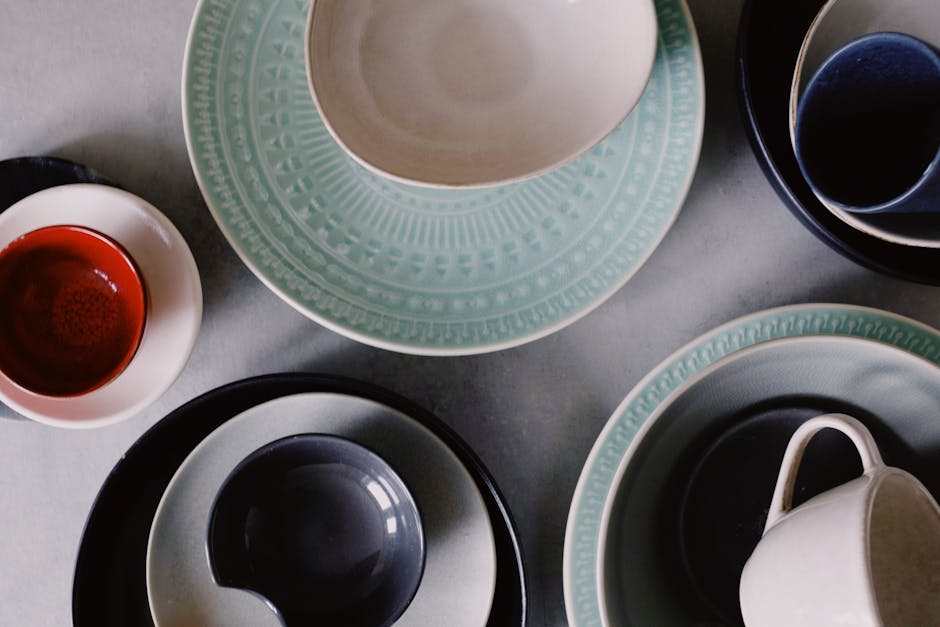
How Ceramic Bowl Size Changes Your Eating Habits at Home
You sit down to a bowl of pasta on a weeknight. The bowl is wide and deep — you fill it to what looks like a normal amount. Somewhere between the couch and the kitchen sink, you realize you ate twice what you intended. The bowl made that decision before you lifted a fork.
This happens in millions of kitchens every night. The fix is simpler than a new diet plan.
Why Bowl Geometry Is the Hidden Variable in How Much You Eat
Food researchers have studied this for decades. The consistent finding: people rely on visual cues more than hunger signals to decide when to stop serving themselves. A larger vessel looks less full at the same food volume, so people add more to compensate. The plate or bowl sets an expectation before the food even arrives.
More recent controlled research — separate from the debated Cornell cafeteria studies — confirms the basic mechanic: bowl diameter and depth both influence self-served portions. A 32 oz wide bowl triggers larger scoops than a 22 oz rimmed bowl holding the same food. Not because people are careless, but because the brain reads spatial cues automatically.
Does Depth Matter More Than Width?
Yes — and the effect is larger than most people expect. Deep bowls with a narrower mouth create the illusion of fullness faster than shallow wide ones at the same volume. A 22 oz bowl designed deep rather than wide will feel “more full” at a standard pasta serving compared to a shallow 32 oz option that spreads the same food across a larger surface.
This is why rimmed deep plates — which combine the containment of a bowl with the visual structure of a plate — became standard in nutrition coaching circles. They work for pasta, grain bowls, soups, and large salads without changing the portion signal each time. One piece, multiple uses, consistent visual feedback.
The 9-Inch vs. 10-Inch Diameter Difference
Going from a 9-inch to a 10-inch bowl diameter sounds trivial. It is not. The surface area increase is about 23%, which means a serving that looks complete in a 9-inch bowl looks sparse in a 10-inch one. Most people unconsciously compensate by loading more food.
Restaurant designers have known this for years. Standard pasta bowls in fast-casual Italian chains are often 11–12 inches specifically because a $14 portion of spaghetti looks generous at that scale without increasing actual food costs. The bowl is doing marketing work, not nutrition work.
Why Ceramic Specifically Has an Edge Over Plastic
For the portion psychology angle, material doesn’t matter much — size and depth do. But ceramic carries a real practical advantage over plastic and melamine: weight. Heavier dinnerware slows eating pace measurably. You pick it up more deliberately, set it down between bites, and tend to eat more attentively without consciously trying. This has been replicated in hospitality research on tableware weight and perceived meal quality — it’s not a myth.
Beyond pace, ceramic doesn’t absorb odors or stain the way plastic does over time. A quality ceramic bowl looks and smells the same after 500 dishwasher cycles. Plastic warps, discolors, and starts to carry faint traces of the last five things you heated in it. That matters more than most people realize when you’re eating from the same four bowls every week.
22 oz vs. 32 oz: The Portion Bowl Comparison That Matters
Most people buying pasta bowls face a choice between compact 22 oz rimmed styles and larger 32–34 oz wide restaurant-format bowls. Here is the actual breakdown across the factors that affect daily use:
| Feature | 22 oz Rimmed Deep Bowl (9.1 inch) | 32 oz Wide Restaurant Bowl (11–12 inch) |
|---|---|---|
| Standard pasta serving appearance | Looks complete and full | Looks sparse — triggers larger self-serve |
| Soup at standard serving (1.5 cups) | Full bowl, room for toppings | Looks nearly empty |
| Grain bowls and ramen | Ideal — contains toppings, holds broth | Works, but portions look thin |
| Dishwasher rack fit | Fits standard lower rack without stacking tricks | Often requires careful arrangement |
| Oven-safe range | Most stoneware: up to 450°F | Varies — larger mass heats unevenly |
| Price range (set of 4) | $28–$45 | $35–$65 |
| Best use case | Everyday meals, portion-conscious households | Entertaining, large-format presentations |
The 22 oz ceramic pasta bowls priced at $32.95 for a set of four sit precisely in this sweet spot — deep enough to hold a full ramen or pasta portion without spreading it flat, rimmed so it reads as a dinner piece rather than a cereal bowl. At 9.1 inches, a standard serving looks like a real meal, not a diet plate.
For most households cooking pasta, rice dishes, or soups four or five nights a week, the 22 oz size is the practical choice. If you’re hosting dinner parties where presentation carries weight, go larger. But for daily home cooking, a bigger bowl almost always means you’ll serve yourself more without noticing the difference.
What “Microwave Safe,” “Oven Safe,” and “Dishwasher Safe” Actually Mean for Ceramic
These labels appear on nearly every ceramic product sold today. They do not all mean the same thing, and misreading them is how people crack good bowls or burn their hands on a Tuesday morning.
Microwave Safe: What It Guarantees (And What It Doesn’t)
A microwave-safe ceramic bowl contains no metallic glazes that would arc in the microwave. That is the primary guarantee. It does NOT mean the bowl stays cool. Dense stoneware absorbs microwave energy and can get significantly hotter than the food inside — especially with thick dishes like oatmeal, lentil soup, or refried beans.
The practical rule: always use a towel or oven mitt when pulling ceramic from a microwave after more than 90 seconds of heating. Assume the bowl is hot even when the food inside is not scalding yet. This is not a product defect — it is just how ceramic thermodynamics work.
Oven Safe: Know Your Temperature Ceiling
Most quality stoneware is oven safe to 450°F–500°F (230°C–260°C). That covers baking, roasting, and warming — essentially every standard home cooking application. Where people get in trouble is using oven-safe ceramic directly under a broiler. The sudden radiant heat from a broiler element can crack even high-quality stoneware, because the thermal shock is faster than the ceramic can equalize.
Brands like Le Creuset and Emile Henry publish specific temperature limits for each product line and explicitly address broiler use. For unlabeled or generic ceramics, treat 400°F as your safe ceiling and skip the broiler entirely.
Dishwasher Safe: What Degrades Over Hundreds of Cycles
Dishwasher-safe ceramic survives the wash cycle. That is the guarantee. What it does not guarantee is that decorative elements survive long-term. The alkaline detergent and sustained heat of a dishwasher slowly dull glazed patterns and any metallic trim. Plain white or single-color ceramics hold up best — largely unchanged after 300 cycles. Patterned or gold-rimmed ceramics show visible fading within 6–12 months of daily dishwasher use.
Chip-resistant and scratch-resistant ceramics — like the 8-inch embossed salad plates built to restaurant kitchen standards — use a harder glaze formulation fired at higher temperatures. In commercial kitchen environments, plates go through industrial dishwashers 150–200 times a day. A glaze designed for that use survives home dishwashers for years without the surface degradation you see in standard consumer ceramics. The embossed texture also hides minor surface wear better than a completely smooth finish, which is a practical advantage in a busy kitchen.
The Honest Take on Budget Ceramic Sets
Ceramic sets priced under $20 for four pieces will chip within the first three months of daily use. Not might. Will.
The actual price floor for ceramics that survive daily dishwasher cycling and the occasional knock against a stainless steel sink is around $28–$35 for a set of four. Below that threshold, you’re typically buying thinner walls and lower-firing-temperature glazes — both signs of shorter lifespan regardless of how carefully you handle them. The Corelle Livingware series is an exception, starting around $25 for four pieces, but Corelle uses laminated glass rather than traditional stoneware — a meaningfully different material that behaves differently under impact and heat.
Buying two sets of cheap ceramics over three years costs more and produces more waste than buying one mid-range set once.
How to Build a Complete Dinnerware Setup for a Family of Four
Most households underequip their kitchen and wonder why mealtime feels inconvenient. A functional setup for four people does not require a 16-piece matching service set. It requires five categories of pieces, each chosen for actual use rather than shelf aesthetics:
- Dinner plates (10–10.5 inch), 4 pieces: IKEA’s 365+ stoneware series at $4.99 per plate is a legitimate starting point — thick walls, consistent glaze, and easy to replace individually when one breaks. Farberware and Gibson also make solid options in this range.
- Deep pasta and soup bowls (22 oz, 9-inch range), 4 pieces: The workhorse piece. Covers pasta, grain bowls, ramen, soup, and large salads. This single size handles roughly 80% of everyday meal scenarios. A set of four in quality stoneware around $30–$35 is the right investment anchor for the whole setup.
- Small plates (7.5–8.5 inch), 4 pieces: The most underused piece in a home kitchen and arguably the most useful. Works for appetizers, desserts, side dishes, toast, and snacks. Also an excellent size for portion-conscious main meals when the goal is eating a complete but measured dinner without using a full-size dinner plate.
- Mugs or breakfast bowls (12–16 oz), 4 pieces: Different use case from soup bowls — you want lighter weight and comfortable handling for morning eating. The Anchor Hocking Presence glass bowl series ($18 for a set of 4, 16 oz) works if you prefer visibility, or a standard 12 oz ceramic mug doubles adequately as a cereal bowl at this size.
- One large serving bowl (50+ oz), 1–2 pieces: For family-style meals at the table. Buy this separately from your everyday set — a single Le Creuset stoneware serving bowl ($45–$55) will outlast three full sets of matching consumer ceramics and serves pasta, salad, and grain dishes equally well.
Total cost for this five-category setup: roughly $85–$135 for four people, depending on brand choices at each step. Replacing individual pieces as they break costs a fraction of buying full matching sets repeatedly.
One failure mode to avoid: buying an oversized complete matching set. Twenty-piece sets sold as “a complete kitchen solution” typically include serving platters used twice a year, oversized dinner plates that work against portion awareness, and mugs already covered by whatever coffee equipment you own. Buy intentionally by category, not by box count.
When the 8-Inch Plate Outperforms a Standard Dinner Plate
The standard American dinner plate has grown from about 9 inches in the 1950s to 11–12 inches in most sets sold today. That growth is not neutral — it happened in parallel with average portion sizes and correlates with how much food people serve themselves at home. For everyday household meals in 2026, the 8-inch plate is often the more useful tool.
What an 8-Inch Plate Actually Holds
An 8-inch plate holds a complete balanced meal: a palm-sized protein, a cup of cooked vegetables, and half a cup of starch. The plate looks full. Nothing hangs over the edge. There is no visual signal that anything is missing or insufficient.
Put the same meal on a 10.5-inch plate and it looks like a sample. People compensate — a bit more pasta, a larger piece of protein, extra bread to fill the negative space. Not from hunger, but from a visual mismatch between the plate and the food.
Scratch-Resistant and Chip-Resistant: What These Terms Actually Mean in Practice
Scratch resistance refers to the glaze hardness — specifically, whether metal cutlery leaves visible marks across the surface. Standard consumer ceramics show fork and knife marks within months of daily use. A harder glaze formulation, typically achieved through higher kiln temperatures during manufacturing, resists this abrasion and keeps the plate surface looking clean after years of real-world use.
Chip resistance refers to the rim durability — the most vulnerable point on any plate. Thicker rim profiles and harder glaze reduce the frequency of chips when plates are stacked, loaded into dishwasher racks, or handled quickly during cleanup. Restaurant-grade specifications exist because commercial kitchens run plates through rough handling 200-plus times per day. For home use, that durability standard translates to plates that still look presentable after two or three years rather than six months.
When NOT to Default to a Small Plate
The 8-inch plate is not a universal replacement. Skip it when serving dishes designed to be generous — a large pasta entrée, a full roast dinner, or holiday plates where abundance is the visual intent. Skip it when hosting guests who expect a traditional table setting. And skip it for foods that need room to spread, like a composed salad you’re tossing at the table.
Most households land well with both sizes in rotation: an 8-inch plate for weekday dinners where portion awareness is part of the goal, and a 10-inch dinner plate for weekends, hosting, and larger meals. That two-size approach covers 95% of real home cooking without requiring specialty equipment or rigid rules.
You started this by filling a too-large bowl on a Tuesday night and eating more than you planned. The practical fix is not a stricter diet — it is a 22 oz rimmed bowl that makes a normal serving look like a full meal, and an 8-inch plate that makes a balanced dinner look complete. The right dinnerware calibrates your baseline before you even pick up a fork. That is a change you make once and benefit from every single night.