Why Choose Nutritious Smoothies?
Nutritious smoothies are a quick and delicious way to boost your health. They offer several core advantages:
- Better Nutrient Absorption: Blending breaks down fruits, vegetables, and seeds, making vitamins, minerals, and antioxidants easier for your body to absorb.
- Meal Prep Convenience: Smoothies save time—make a batch ahead, store in the fridge or freezer, and grab a healthy meal or snack on the go.
- Versatility: Perfect for breakfast, snacks, or post-workout refueling. Customize ingredients to suit your taste and dietary needs.
| Benefits | Why It Matters |
|---|---|
| Nutrient Absorption | Maximizes vitamin and antioxidant intake |
| Meal Prep Convenience | Saves time in busy schedules |
| Versatility | Fits any time of day and all lifestyles |
Avoiding Common Pitfalls
Despite the benefits, many smoothies can be loaded with hidden sugars or empty calories. To keep your smoothie healthy and balanced:
- Skip sugary fruit juices and sweetened yogurts.
- Use whole fruits instead of fruit syrup or concentrates.
- Limit high-sugar fruits; balance with vegetables like spinach or kale.
- Avoid adding extra sweeteners like honey or agave unless needed.
- Opt for natural sweetness from ripe bananas or frozen berries.
By choosing low sugar smoothies and focusing on whole, nutrient-packed ingredients, you get the energy and health benefits without the crash or extra calories.
Nutritious smoothies are an easy, tasty way to nourish your body. Start simple, stay mindful of sugar, and enjoy their convenience any time of day.
Essential Ingredients for Nutritious Smoothies
Choosing the right ingredients is key to making easy recipes for nutritious smoothies that taste great and pack a health punch. Start with base liquids like almond milk, coconut water, or Greek yogurt. These provide creaminess and protein while keeping your smoothie light or rich, depending on your preference.
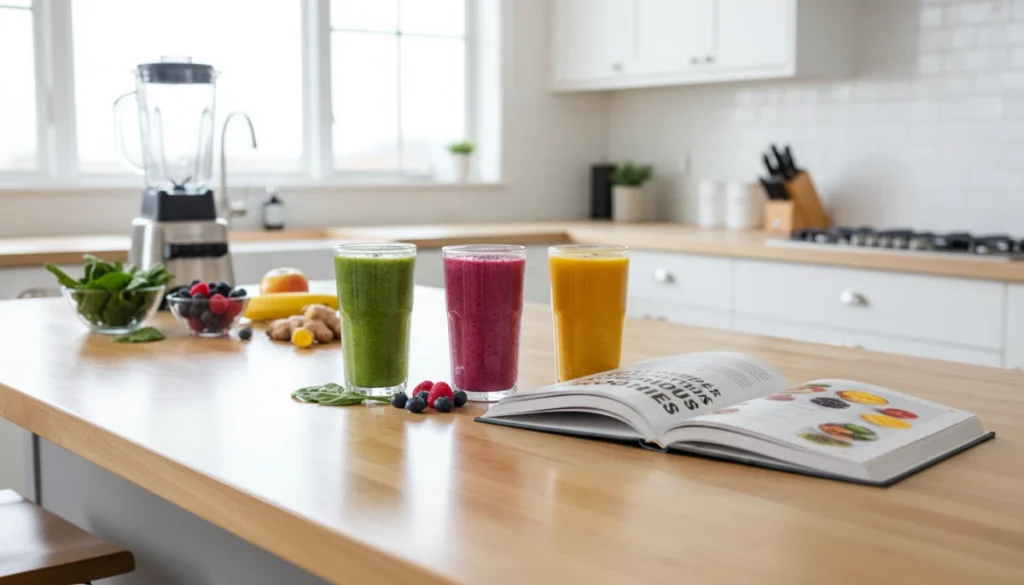
For natural sweetness and antioxidants, add fruits such as frozen bananas, mixed berries, mango, and pineapple. Frozen fruit also helps give your smoothie a thick, refreshing texture without needing ice, which can water it down.
To sneak in some greens without overwhelming the flavor, include mild-tasting vegetables like spinach and kale. These add fiber, vitamins, and minerals without the strong taste that can turn people off healthy smoothie recipes.
Boost your smoothie’s protein with options like Greek yogurt, nut butters, chia or flax seeds, and protein powders—perfect for post-workout recovery or a filling breakfast smoothie. Adding healthy fats like avocado, nuts, seeds, or oats increases satiety, keeps you fuller longer, and adds important nutrients.
Kitchen tips: Keep a freezer stash of cut fruits and veggies separated into portions for quick smoothie prep. This saves time and reduces waste while ensuring you always have nutrient-packed drinks ready. Stocking essentials like nut butters and protein powders means you can easily customize smoothies for weight loss, energy boosts, or vegan diets.
For deeper insight on building nutrient-rich snacks, check out this guide on separating proteins for a high-protein diet for smoothie boosting ideas.
Tips for the Perfect Smoothie Every Time
Making a nutritious smoothie that tastes great and has the right texture is easier when you follow some simple blending tricks:
- Blend in the right order: Start with your base liquids like almond milk or coconut water first. Next, add soft ingredients such as yogurt or fresh fruits. Add frozen items or ice last to get a smooth blend without chunks.
- Get the thickness just right: If it’s too thick, add a splash more liquid. Too thin? Toss in a handful of oats, avocado, or a few frozen fruits for creaminess, without any added sugar.
- Avoid common blending mistakes: Try not to overload your blender with ice alone—it can cause lumpiness or damage your blender. Instead, use frozen fruit to chill and thicken your smoothie naturally.
- Make-ahead freezer packs: Pre-portion your fruit, veggies, and add-ins into freezer bags. When ready, just grab a pack and blend with your chosen liquid for quick, no-fuss smoothies anytime.
- Customize for your diet: Whether you’re vegan, low-carb, or just want a protein boost, swap dairy yogurt for plant-based, use protein powder or nut butter, or exclude sweet fruits according to your preference.
Common mistakes to avoid: Don’t forget to taste as you go, skipping sweeteners where possible, and avoid blending too long, which can heat and reduce nutrients.
15 Easy Nutritious Smoothie Recipes
Here are 15 healthy smoothie recipes that are easy to make and packed with nutrients. Whether you need a quick breakfast smoothie, a post-workout boost, or a tasty snack, these fruit and vegetable smoothies cover all bases with simple ingredients and great flavors.
- Classic Strawberry Banana: A simple, kid-friendly smoothie that combines sweet strawberries and creamy banana for a quick nutritious drink.
- Green Detox Spinach Pineapple: Refreshing and cleansing, it blends mild spinach with tropical pineapple for easy green smoothies packed with antioxidants.
- Peanut Butter Banana Protein: High-protein and satisfying, perfect for post-workout recovery with peanut butter and banana.
- Tropical Mango Coconut: Sweet and vibrant, this smoothie brings the tropics to your glass with mango and coconut water.
- Berry Oat Fiber Boost: Great for digestion and fullness, loaded with berries and oats for a nutrient-packed drink.
- Chocolate Avocado Indulgence: Creamy, indulgent, but still healthy, combining rich avocado with antioxidant-rich cocoa.
- Orange Carrot Immunity: Vitamin C-rich for immune support, bursting with fresh oranges and carrots.
- Kale Apple Ginger Green: A spicy and energizing combo, blending kale, apple, and ginger for a natural energy lift.
- Blueberry Chia Antioxidant: Packed with antioxidants and omega-3s from blueberries and chia seeds.
- Watermelon Refresh: Light, hydrating, and perfect for summer, featuring juicy watermelon.
- Sweet Potato Spice: Seasonal fall flavor with nutrients, mixing sweet potato and warming spices.
- Coffee Mocha Energy: Combines caffeine and antioxidants for a morning energy kick.
- High-Protein Greek Yogurt Berry: Muscle-friendly with Greek yogurt and antioxidant-rich berries.
- Vegan Tropical Chia: A dairy-free and nutrient-dense option using tropical fruits and chia seeds.
- Simple 3-Ingredient Mixed Berry: Minimal ingredients, maximum flavor – just berries, a liquid base, and a sweetener if you like.
For more ideas on making fresh, healthful smoothies with seasonal ingredients, check out our guide to healthy summer recipes. Also, consider exploring what’s in season with this seasonal produce guide, which makes picking the best fruits and veggies for smoothies even easier.
Customization Ideas for Specific Goals
When making nutritious smoothies, tailoring them to your personal goals can make all the difference. Here are simple ways to customize recipes for common needs:
- Weight Loss: Focus on low-calorie, high-fiber ingredients like spinach, cucumber, and berries. These keep you full longer without extra calories. Avoid adding sugars or high-calorie add-ins.
- Energy and Workout Recovery: Boost your smoothie with oats, Greek yogurt, or plant-based protein powders. These add sustained energy and support muscle recovery post-workout.
- Kid-Friendly: Use mild fruits like bananas and strawberries, and sneak in veggies such as spinach or zucchini where their taste stays hidden. Sweet fruit combos help mask greens.
- Immune Support: Citrus fruits (oranges, lemons), fresh ginger, and turmeric provide a natural boost to your immune system. These ingredients add zing and important antioxidants.
- Dairy-Free and Vegan Swaps: Replace dairy with almond or coconut milk, use plant-based protein powders, and swap honey for maple syrup or agave to keep smoothies vegan and allergy-friendly.
Adjusting smoothie ingredients this way makes it easy to create nutrient-packed drinks that fit your lifestyle and preferences. For quick snack ideas that complement your smoothies, check out effective snack time food options.
Common Questions About Nutritious Smoothies
Best Blenders for Smoothie Making
Choosing the right blender is key for smooth, creamy smoothies. High-powered blenders like Vitamix, Ninja, or NutriBullet crush frozen fruits and veggies with ease. Look for models with multiple speed settings and easy cleanup to make your smoothie prep hassle-free.
Meal Prepping Smoothies: Tips and Storage
Prepping smoothies ahead saves time. Make freezer packs with your pre-measured fruits and veggies, then just add liquid and blend. Store finished smoothies in airtight containers in the fridge for up to 24 hours or freeze for longer. Avoid storing too long to keep taste and nutrients fresh.
How to Thicken Smoothies Naturally
Skip added sugars and thicken your smoothie naturally with:
- Greek yogurt or silken tofu for creaminess and protein
- Frozen bananas or mango for natural sweetness and texture
- Chia or flax seeds which also add fiber and healthy fats
- Oats for a filling, slightly nutty boost
Are Smoothies Good for Kids? Safety and Nutrition
Smoothies can be a great way to sneak fruits and veggies into kids’ diets. Keep flavors mild and avoid excess sugar. Use natural sweeteners and hidden greens like spinach. Always blend until smooth to avoid choking hazards, especially for younger children.
Storage Tips to Keep Smoothies Fresh
To preserve taste and nutrients:
- Use airtight containers
- Fill containers to the top to limit air exposure
- Store in the fridge and consume within 24 hours
- Freeze leftover smoothie in portion-sized bags or jars
Difference Between Smoothies and Juices Explained
| Feature | Smoothies | Juices |
|---|---|---|
| Includes Fiber | Yes, whole fruits and veggies | No, pulp and fiber removed |
| Texture | Thick and creamy | Thin and liquid |
| Nutrient Content | More filling, slower digestion | Rapid nutrient absorption |
| Sugar Levels | Natural sugars with fiber balance | Can be higher sugar concentration |
Smoothies are more nutrient-packed and filling, making them ideal for meal replacements or snacks packed with fiber and protein. Juices can be refreshing but often miss the fiber, causing quicker sugar spikes.
For further reading on nutrition and health, see our guide on the truth about healthy eating.