A breakfast prepared the evening before gives you one less job when the day begins. Overnight oats are useful because you can mix them straight in the container you will eat from. The aim is a breakfast that fits your appetite, tastes good after chilling and is easy to carry if needed. Start with a single portion, learn the texture you enjoy, then use the same small routine for other make-ahead breakfasts.
Start with the texture you enjoy
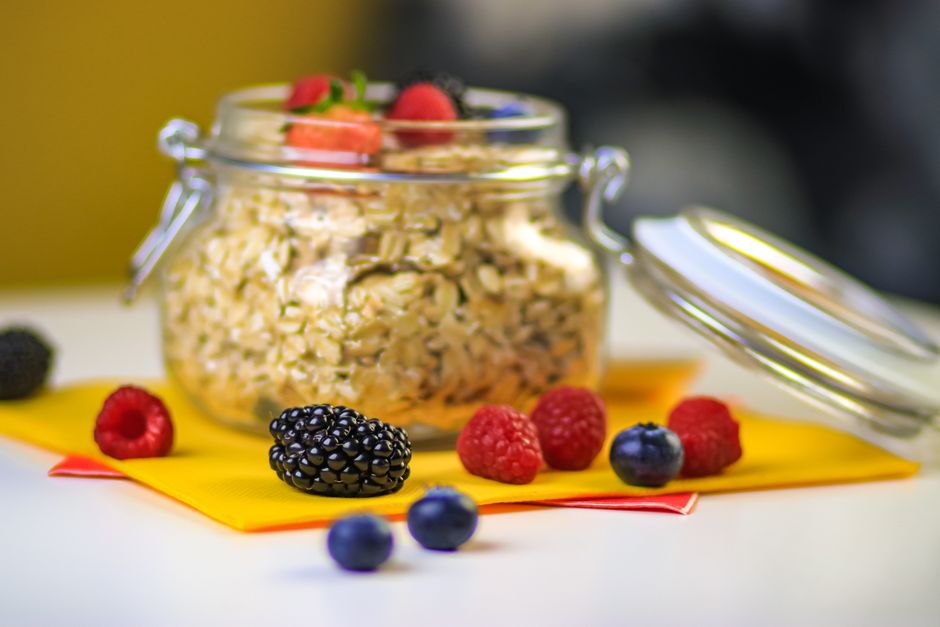
Overnight oats soften as they absorb liquid in the fridge. Rolled oats are a useful starting point: they retain some texture without needing to be cooked first. Quick oats usually make a softer mixture. Steel-cut oats stay much firmer and are better cooked according to their packet instructions before being used in a chilled breakfast.
Choose oats whose packaging allows preparation by soaking, and follow any specific instructions. Mix them with pasteurised milk or a suitable plant drink. Plain yoghurt can make the result creamier, although you may need extra liquid because it also thickens the mixture. Leave enough space in your container to stir comfortably.
For a first attempt, combine half a cup of rolled oats with half a cup of milk or plant drink and a spoonful of yoghurt if you like. This is a starting ratio, not a required serving size. Stir well, cover and refrigerate overnight. In the morning, stir again and add a splash of liquid if the oats feel too thick.
Build one reliable base
Keep your first batch simple so you can tell what needs adjusting. Oats, liquid and an optional spoonful of yoghurt are enough. Adding several unfamiliar ingredients at once makes it harder to identify why a mixture became too thick, too sweet or unpleasantly grainy.
- Put the oats in a clean, food-safe container with a secure lid.
- Add your chosen liquid and yoghurt, if using, then stir right down to the bottom.
- Mix in a little cinnamon or another familiar flavour if you wish.
- Cover and place in the fridge promptly.
- Stir before eating and adjust the consistency, then add any toppings you kept separate.
If you use chia seeds, begin with a small spoonful and allow more liquid. They absorb moisture and can turn a loose mixture quite thick. Seeds are optional; you do not need them to make overnight oats work. A simpler recipe is often easier to repeat on a busy evening.
Keep crunchy toppings separate
Some ingredients improve with an overnight rest, while others lose their appeal. Cinnamon and smooth nut butter can be stirred into the base. Chopped nuts, toasted seeds and crisp cereal generally keep their texture better in a separate dry container. Add them just before eating, using options that suit any allergies in your household.
Apple and cinnamon
Mix cinnamon into the oats and add grated apple before chilling if you enjoy a softer texture. For a crisper finish, cut the apple in the morning instead. A spoonful of plain yoghurt can bring the ingredients together. Taste before adding anything sweet, since the apple may provide enough sweetness for you.
Banana and nut butter
Stir a little smooth nut butter into the liquid before adding the oats, which helps it spread through the mixture. Slice the banana in the morning for a fresher appearance. If nuts are unsuitable, use a tolerated alternative after checking the label, or leave the spread out and use yoghurt for creaminess.
Pear and ginger
Combine chopped ripe pear with a little ground ginger for a different flavour without changing the basic method. Start with a small pinch of ginger and adjust next time. Keep any crunchy topping separate, and remember that very juicy fruit can make the finished oats looser.
Choose ingredients around your needs
You can adjust the portion to your appetite and add foods you enjoy alongside it. Milk, yoghurt and some plant alternatives contribute protein; their amounts vary, so check the packaging if this matters to your choices. Plant drinks also differ in their added nutrients. Look for unsweetened options fortified with calcium when choosing a regular alternative to dairy.
If you need to avoid gluten, choose oats specifically labelled gluten-free and check the other ingredients too. For diagnosed coeliac disease, follow the advice of your healthcare team about including oats. Check labels for allergens each time you buy, particularly when using mixed toppings or substitute ingredients.
If a health condition, pregnancy or prescribed eating plan affects what you can eat, ask your GP or a registered dietitian how to adapt your breakfast. There is no need to force a particular ingredient into your routine simply because it appears in a recipe.
Prepare small batches and keep them chilled
Wash your hands, use clean utensils and rinse fresh fruit before preparing it. Refrigerate soaked oats as soon as you mix them; leaving them on the worktop overnight is not an appropriate soaking method. Keep the fridge operating at the temperature recommended in its instructions and local food-safety guidance.
Start by preparing the next morning’s portion. If you later make more, follow local food-safety guidance for refrigerated prepared foods, the storage directions on your ingredients and the earliest relevant use-by date. Label containers with the preparation date so similar-looking portions do not become a guessing game. Preparing ahead does not extend an ingredient’s safe storage life.
For travel, use a leak-resistant container inside an insulated bag with an ice pack, then refrigerate it when you arrive. Take a spoon and keep toppings sealed separately. If you cannot keep breakfast chilled, choose an option that can safely travel at room temperature instead. Do not rely on smell alone to judge whether a perishable breakfast is safe.
Try make-ahead options beyond oats
If cold oats do not appeal, a yoghurt pot is an easy alternative. Portion plain yoghurt into a container, prepare suitable fruit separately and add oats or another cereal when you eat. Keeping the dry ingredients apart gives you a breakfast with more crunch and less soaking.
You can also cook porridge in advance, cool it promptly and refrigerate it following food-safety guidance. Add a little liquid when reheating because cooked oats thicken as they stand. Reheat thoroughly according to the appliance instructions, stirring to distribute the heat and checking the temperature before eating.
Another option is to prepare components rather than a complete meal. Set out a bowl and spoon, portion dry oats into a covered container and organise refrigerated toppings together. This still saves decisions in the morning while leaving you free to choose a warm breakfast.
Make the evening step easy to repeat
Put breakfast preparation beside something you already do, such as clearing away dinner. Keep oats and your usual flavourings together, with clean containers nearby. Make only what you expect to eat, and choose one flavour until the method feels familiar.
After breakfast, notice one practical detail: was the texture right, did the lid leak, or would a smaller portion have suited you better? Adjust that detail the next evening. A dependable base and a few familiar alternatives give you room to change your mind without rebuilding your morning routine.