Understanding healthy fats in your diet starts with a simple idea: fat is a normal part of food, and different types have different roles. You do not need to avoid every rich ingredient or buy unfamiliar foods to eat well. Learning where fats come from, and how you use them in everyday meals, gives you a practical starting point. Focus on your usual choices over time, with room for foods you enjoy.
Why fat belongs in your diet
Your body needs dietary fat for essential functions, including helping you absorb certain vitamins. Fat also contributes flavour and texture. It makes a dressing smooth, gives a sauce richness and helps carry the flavours of ingredients through a dish. A nourishing meal does not have to be fat free.
Foods usually contain a mixture of fats. Describing a food as a source of unsaturated fat does not mean it contains no saturated fat. You do not need to memorise its exact composition. Recognising the main sources is enough to make everyday decisions easier.
Know the main types of fat
Unsaturated fats
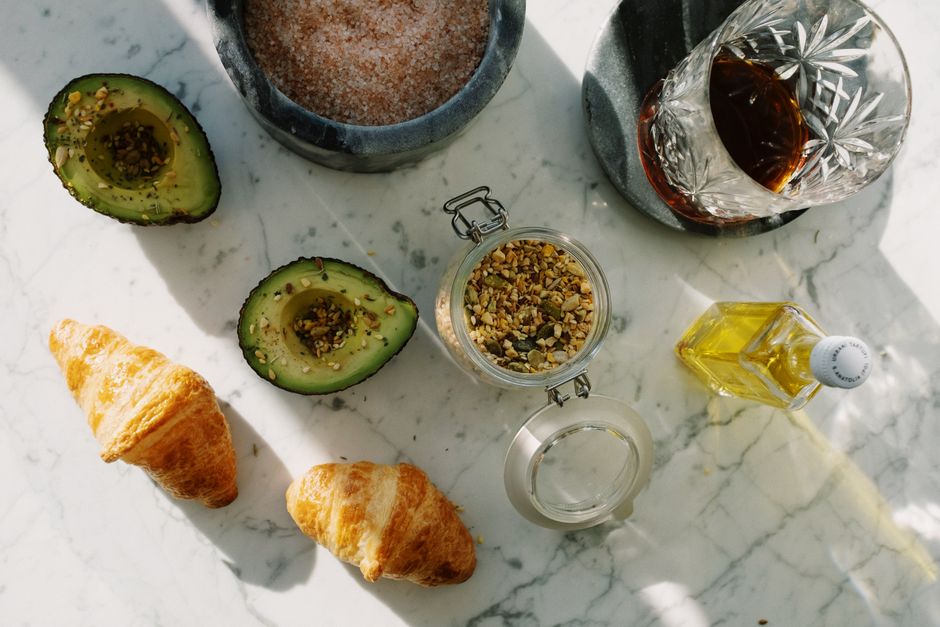
Unsaturated fats are found in foods such as nuts, seeds, avocados, olives, vegetable oils and oily fish. They include monounsaturated and polyunsaturated fats. These foods offer useful alternatives when your meals often rely on butter, cream or fatty meat.
Each source has its own place in the kitchen. Oil works in cooking and dressings, while seeds add crunch and nut butter makes a sauce creamy. Choosing a variety gives you different flavours and textures without having to build every meal around the same ingredient.
Saturated fats
Butter, ghee, cream, fatty meat and many pastries contain saturated fat. Coconut and palm oils are also sources. An ingredient coming from a plant does not automatically make it a source of mostly unsaturated fat.
A practical approach is to choose unsaturated sources more often and use richer ingredients in amounts that suit the dish. You can still enjoy a favourite pastry or a buttery recipe. It is your regular pattern that deserves attention, rather than an isolated food choice.
Trans fats
Some trans fats occur naturally in animal foods. Industrial trans fats can be associated with partially hydrogenated oils. Ingredient information varies between places, but if you see partially hydrogenated oil listed, choosing an alternative is a sensible step. There is no need to turn each shopping trip into a detailed chemistry exercise.
Make a swap that serves the same purpose
Adding more fat to everything is not the aim. Instead, notice where you already use a fatty ingredient and consider an alternative that does the same job. An easy change is more likely to become part of your routine than a complete kitchen overhaul.
- Try olive or rapeseed oil instead of butter for a suitable savoury cooking task.
- Spread mashed avocado on a sandwich when you want a creamy alternative to butter.
- Use a blended nut or seed sauce in a dish that would otherwise rely on cream.
- Try oily fish as an occasional main meal if you eat fish.
- Scatter toasted seeds over vegetables when you want an alternative to a generous cheese topping.
Keep the purpose of the ingredient in mind. Oil will not behave exactly like butter in every baking recipe, and avocado will change a sandwich’s flavour. Start with meals where the substitution feels natural. You can adjust seasonings and textures as you go.
Look beyond a single nutrient
The whole food matters as well as the fat it contains. Nuts and seeds also contribute fibre and other nutrients, while fish provides protein. A spoonful of oil has a different role from a handful of nuts, even when both provide unsaturated fats.
Likewise, a low fat label does not tell you everything about a food. Consider its ingredients, flavour and place in your meal. A lower fat version may suit you, but there is no need to reject a food such as nuts solely because its total fat content looks high. Avoid using one number as a complete judgement.
Use portions that feel manageable
Fat rich ingredients add richness in relatively small amounts. If you find it difficult to judge oil when pouring from a bottle, pour it into a spoon first. Put nuts in a dish instead of eating from a large bag while distracted. These small habits make it easier to notice what you are using.
You do not need a perfect portion for every occasion. Appetite, preferences and overall food needs vary. A meal with avocado and an oily dressing may already have the richness you want, while a simpler dish might benefit from a little seed paste. Aim for a satisfying meal rather than a collection of ingredients added because they sound healthy.
Put omega fats in perspective
Omega-3 and omega-6 are families of polyunsaturated fats. Walnuts, flaxseed and chia seeds provide plant sources of omega-3 fats, while oily fish provides different forms. Many nuts, seeds and vegetable oils contain omega-6 fats. You do not need to calculate a ratio to put together ordinary meals.
Learning about these fats does not mean you automatically need an oil supplement. If you are considering one for a health concern, speak with a GP or pharmacist, especially if you take medicines. During pregnancy, ask a qualified professional about suitable fish choices and supplements rather than relying on general food advice alone.
Choose and store cooking fats thoughtfully
Follow the label’s guidance when choosing an oil for cooking. Some oils are suited to dressings and finishing dishes, while others are intended for heating. Avoid heating oil until it smokes. You do not need an expensive speciality oil for everyday meals; choose something that suits your cooking and that you enjoy using.
Keep oils tightly closed, away from direct light and heat. Follow packaging instructions for nuts, seeds and nut butters, including any advice about refrigeration after opening. Buy amounts you can use while fresh. If an oil or packet of nuts develops an unpleasant stale smell, discard it.
Build from one familiar meal
Choose a meal you already make and identify its main source of fat. Consider one alternative, try it and decide whether you like the result. A change that fits your tastes and routine is easier to repeat. There is no requirement to change every recipe at once.
Keep variety and enjoyment in view as you explore different ingredients. If you have a health condition or have been advised to follow a particular diet, a GP or registered dietitian can help you adapt these suggestions to your needs. For everyday eating, a few familiar choices made consistently are a useful place to begin.