Getting started with mindfulness meditation can feel confusing if you expect to sit down and immediately have a quiet mind. Thoughts usually keep arriving, and ordinary noises still happen. The practice is to notice what is happening, recognise when your attention has wandered, and gently return to something you have chosen to observe. You do not need special equipment or a particular personality. A short, manageable session gives you a way to explore the practice without turning it into another task to get right.
Understand what you are practising
Mindfulness involves paying attention to your present experience with curiosity and as little judgement as you can manage. During meditation, you deliberately make room for that attention. You might notice the feeling of your feet on the floor, sounds around you, or the movement of natural breathing.
The aim is not to remove every thought, force yourself to relax, or decide that every experience is pleasant. You can notice impatience without liking it. You can recognise a worry without solving it during the session. This distinction makes the practice more realistic: you are learning to notice and return, rather than trying to create a perfect state of mind.
Choose a simple focus for your attention
A focus, sometimes called an anchor, is something you return to when you realise you are distracted. Choose one that feels neutral and easy to find. You can change it if it becomes uncomfortable.
- Contact: notice where your feet meet the floor or your hands rest on your lap.
- Sound: listen to ordinary background sounds without needing to identify every source.
- Sight: rest your gaze on a plain object and notice its shape or colour.
- Natural breathing: observe a comfortable sensation of breathing without changing its pace or depth.
You do not have to use your breath. If paying attention to it feels unsettling or makes you try to control it, choose an external focus such as sound or sight. Mindfulness meditation is an attention practice, so there is no need to add breath holds or other breathing techniques.
Make the first session easy to begin
Use a comfortable, supported position
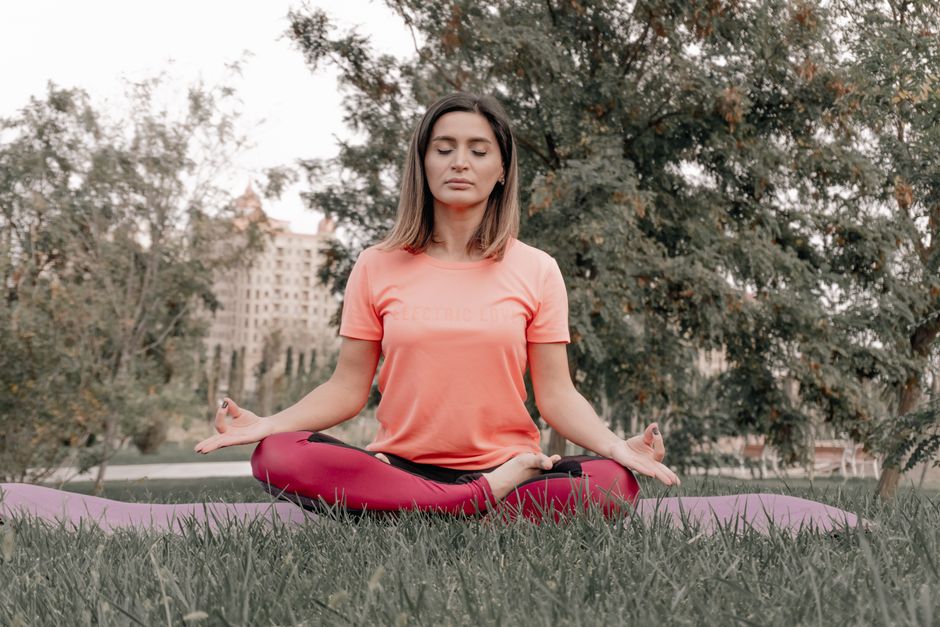
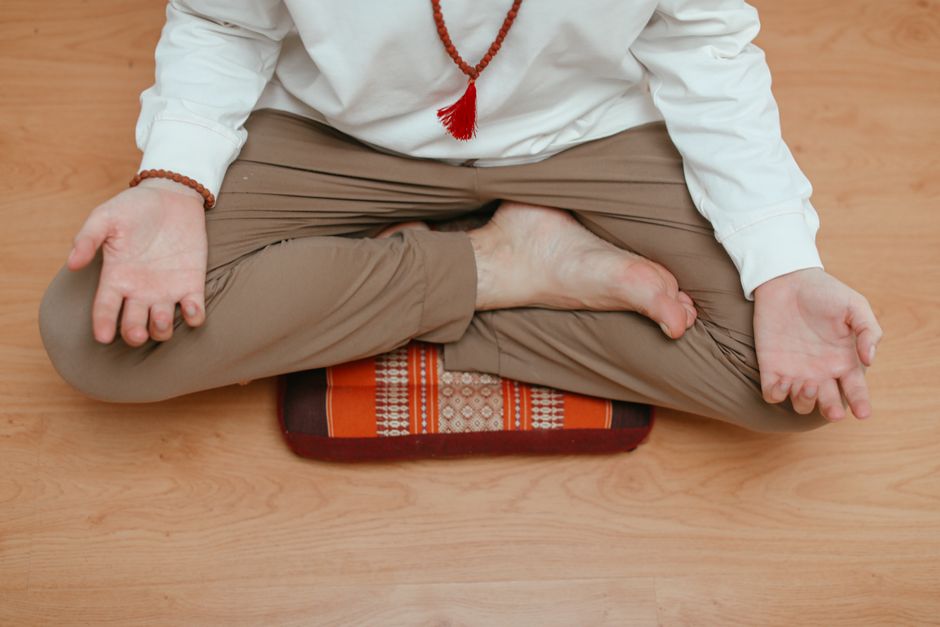
Sit in a chair with your feet supported, or choose another position that suits your body. Let your hands rest somewhere comfortable. There is no requirement to sit cross-legged, hold your back rigid, or remain completely still. Adjust your position when you need to; pain is not a useful target to push through.
Keep your surroundings ordinary
Choose a place where you can pause safely and are unlikely to need to respond immediately. Silence is optional. A little household noise can be part of what you notice. Keep your eyes open if you prefer, with a relaxed gaze. Avoid practising while driving, operating equipment, or doing anything that requires your full attention.
Set a small boundary
Try a minute or two to begin with, using a gentle timer if helpful. The time is a practical boundary, not a performance target. Starting briefly lets you find out how the experience feels before deciding whether you want a longer session.
Try this first meditation
- Arrive: look around and notice where you are. Feel the support of the chair or floor.
- Choose: pick one comfortable anchor, such as the contact beneath your feet.
- Observe: notice its qualities. You might feel pressure, warmth, or the texture of a sock.
- Recognise wandering: when you notice planning, remembering, or judging, silently acknowledge it with a simple word such as thinking.
- Return: bring your attention back to the anchor without scolding yourself.
- Finish: look around again, move comfortably, and choose what you will do next.
You might repeat the noticing and returning steps many times. That does not mean the session has gone wrong. The moment you realise you were distracted is a moment of awareness. You do not need to count distractions or compare today with yesterday.
Work with the things that feel awkward
When your mind feels too busy
A busy mind gives you plenty to notice. Instead of following each thought into its story, briefly acknowledge that thinking is happening and return to your focus. If that feels demanding, shorten the session. You can also use a visible object as your anchor to make the next return more concrete.
When you feel bored or restless
Notice the urge to check the timer or get up without treating it as a character flaw. You can shift position, open your eyes, or end the session. If sitting does not suit you, try a few attentive steps in a clear, safe space, noticing the contact of each foot. Take care with balance and use support if needed.
When you keep judging your progress
Thoughts such as wanting the session to feel easier can become another thing to recognise. You might label them as judging and return to your anchor. There is no need to replace them with enthusiastic thoughts. Simply acknowledging that you noticed is enough.
Use guidance without making it complicated
You can practise on your own using the steps above, or follow a short guided session. Look for clear instructions that allow you to open your eyes, change position, choose a different anchor, or stop. You do not need a large collection of recordings to begin.
If you join a class, ask about the teacher’s training and how they support beginners who find meditation uncomfortable. Promises of guaranteed calm or instructions to ignore distress are reasons to look elsewhere. A suitable teacher should respect your choices and acknowledge the limits of their role.
Decide whether the practice suits you
After a session, consider practical questions: was the position comfortable, was the focus suitable, and did the length feel manageable? You can make one adjustment next time. Avoid scoring yourself on how peaceful you felt; a session can include noise, distraction, and ordinary frustration.
Meditation does not suit everyone at every point in life. If you feel panicky, overwhelmed, detached, or increasingly distressed, stop and bring your attention to your surroundings. Look around, feel your feet supported, and contact someone you trust if helpful. Seek advice from a GP or qualified mental health professional if discomfort persists, or before continuing if you have concerns related to a health condition or past trauma. Meditation should not replace recommended care.
If you choose to continue, keep the next attempt small and familiar. Use the same chair and anchor, or adjust whatever felt awkward. Your next step can simply be to sit comfortably, notice one present sensation, and return to it gently when your mind moves elsewhere.