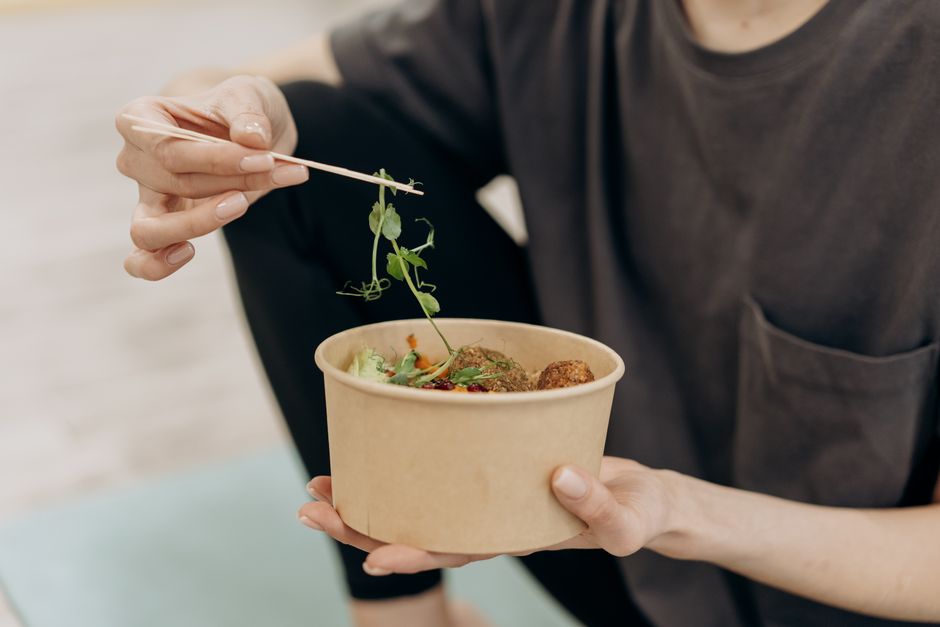
Meals can easily become something you squeeze between other tasks. You might finish lunch while answering messages, eat dinner standing at the kitchen counter, or realise that you barely noticed a favourite dish. Mindful eating offers a gentle way to bring some attention back to those moments. You do not need a silent room, a special menu, or an unusually long lunch break. Start by making a little space to notice your food and your experience of eating it.
Give attention a place at the table
Mindful eating means paying attention to what is happening as you eat, with curiosity rather than criticism. That might include the flavour of your meal, how comfortable you feel, or how much your surroundings are pulling you towards another task. Slowing down creates opportunities to notice these things, but speed alone is not the goal.
You can eat slowly while worrying about every mouthful, and that would hardly make a relaxing meal. A more useful aim is to return your attention when you notice it has wandered. There is no need to judge the meal as good or bad, or to turn eating into another performance you must get right.
Make the first moments easier
Choose one meal or snack that already fits your day. Practising during a relatively manageable moment is more realistic than trying to transform every breakfast, lunch, and dinner at once. An ordinary sandwich at the table is enough; the food does not have to be homemade or beautifully presented.
Before you start, do one small thing that marks a pause between the previous activity and eating. Close your laptop, put work papers aside, or sit somewhere comfortable if you can. You might simply look at the meal before picking up your cutlery. This is an invitation to arrive, rather than an elaborate ritual.
- Keep anything you need within reach so you can settle into the meal.
- Move your phone out of your immediate line of sight if that feels practical.
- Choose a comfortable position that suits your body and circumstances.
- Let an unfinished task wait until you have had a chance to eat.
Notice a mouthful without analysing it
Try giving the first mouthful your attention. Notice its temperature, texture, and flavour. A piece of toast might feel crisp at the edges and softer in the middle; soup may have a familiar aroma you usually overlook. You do not need sophisticated descriptions. Even noticing that something is warm or pleasantly crunchy counts.
Continue eating at a comfortable pace. You can occasionally rest your cutlery or put your sandwich down between bites, but there is no required chewing count or minimum meal length. Swallow comfortably before taking another mouthful. If counting, timing, or monitoring makes you tense, leave those approaches aside.
Your attention will drift. You might start planning the afternoon or remembering a conversation. When you notice, gently return to something concrete: the next taste, the feel of the cup in your hand, or the food in front of you. Repeatedly returning is part of the practice.
Check in without creating food rules
At a natural pause, consider how you feel. Are you still hungry? Is the meal satisfying? Would you like more food, a different flavour, or simply a moment before continuing? Treat your answers as information. There is no correct feeling you must produce, and you do not have to stop eating at a prescribed point.
Hunger and fullness are not always clear. Your schedule, emotions, medication, or health circumstances may make them difficult to interpret. You may also need to eat at planned times even when you do not feel especially hungry. Mindful eating should fit around your nutritional needs and any professional advice you already follow.
Paying attention is not a reason to delay food, shrink meals, or earn what you eat. If you are hungry, you can respond by eating. If you finish a meal and want more, you can have more. You can also enjoy food for its taste, tradition, or place in a shared occasion.
Work with everyday distractions
When you have a short lunch break
You do not need to stretch lunch beyond the time available. Try setting work aside for the opening few mouthfuls, or take a brief pause before returning to your sandwich. Keep the focus on having a chance to eat. If your break is consistently too short, the practical issue may be your workload or access to breaks.
When you eat with other people
Conversation belongs at the table too. Mindful eating does not require everyone to be quiet or follow your pace. You can enjoy company and occasionally notice your food between exchanges. Avoid commenting on how quickly someone else eats, how much they serve, or whether they appear hungry.
When quiet meals feel uncomfortable
Some people find background music, a familiar programme, or company helpful while eating. You can keep that support and experiment with small moments of attention. Perhaps notice the first sip of a drink or pause when changing from one part of the meal to another. Choose a setting that makes eating manageable.
Meet difficult meals with kindness
You may sometimes eat quickly because you are very hungry, distracted, upset, or dealing with a demanding day. That is not a failed exercise. Once you notice, you can choose what would help now: continuing your meal, sitting down if possible, or arranging something to eat later if you were interrupted.
If feelings come up during a meal, you do not have to solve them before eating. Acknowledge what you can: perhaps you are tired, frustrated, or looking for comfort. You can eat and also seek another form of support, such as talking with someone you trust. Avoid making the next meal smaller to compensate for this one.
If paying close attention to food increases anxiety, guilt, or urges to restrict eating, step back from the exercise. Speak with a GP or a registered dietitian experienced in eating difficulties. Seek professional guidance for persistent appetite changes, pain with eating, or swallowing difficulties. If you have a health condition or are pregnant, keep following the eating advice given by your qualified professional.
Build a habit that stays flexible
For your next suitable meal, choose just one action: put your phone aside, notice the opening mouthful, or pause briefly partway through. Afterwards, ask whether that action made the experience more comfortable or enjoyable. You do not need a food diary, a score, or a record of how much you ate.
Keep what helps and adapt what does not. Some meals will be sociable, some hurried, and some quietly enjoyed on your own. A sustainable practice has room for all of them. The next time you sit down to eat, begin with the food you have and a little attention to the moment.