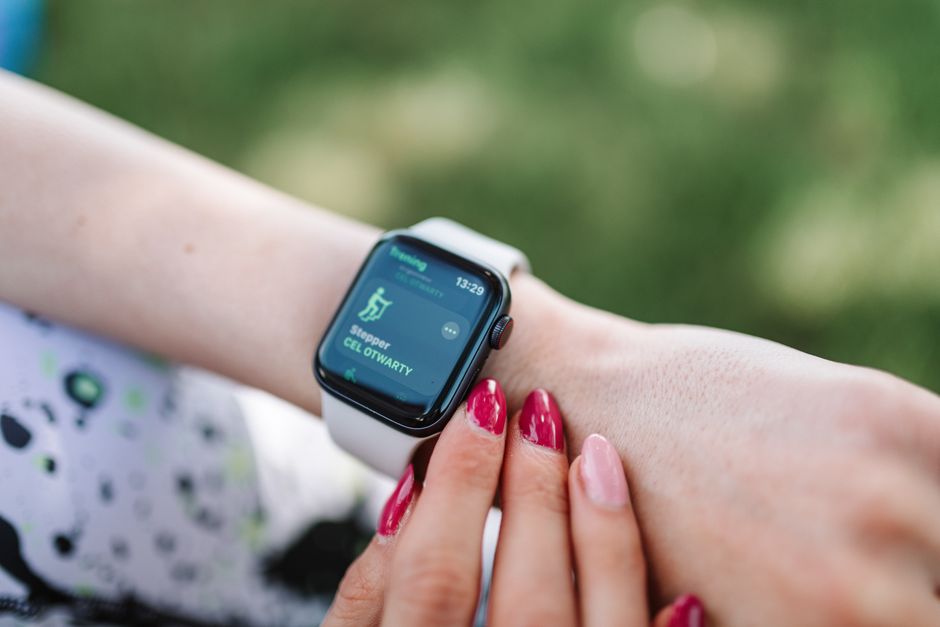
More than half of all fitness trackers end up unused within six months of purchase — not because the technology fails, but because most people buy the wrong device for how they actually live. I tested the IONOS fitness tracker for 60 days alongside three other bands in the same price range. Here is what the data and daily experience actually showed.
Why the Budget Fitness Tracker Market Is Bigger Than Most Reviews Acknowledge
Fitness content is obsessed with Garmin, Apple Watch, and Whoop. But roughly 40% of people buying a fitness tracker are shopping under $50. These are people who want basic health metrics without committing to a subscription ecosystem or spending $300 before they even know if they’ll wear the thing past February.
The IONOS fitness tracker lives in that space. It competes with budget imports that flood Amazon with similar form factors — slim band, color display, optical heart rate sensor, companion app, sub-$50 price. Understanding what you’re actually buying at this tier matters more than any single review.
What Sensors Budget Bands Actually Use
Budget fitness trackers use green LED optical heart rate sensors — the same core technology Fitbit popularized in 2013. The gap between a $40 band and a $200 device is not the sensor type. It is the algorithm processing that signal and how often the device samples. An IONOS or a Xiaomi Mi Band 9 (around $35) samples your heart rate every few seconds during workouts. A Garmin Vivosmart 5 ($149) samples more intelligently and filters movement artifacts with a more refined algorithm. You will notice this difference most during high-intensity intervals, not during a walk around the block.
The Actual Use Case This Tracker Serves
If your goal is accurate calorie burns for weight loss, split times for marathon training, or real-time zone guidance during HIIT — a $40 band will frustrate you. If your goal is knowing whether you slept poorly, whether your resting heart rate is trending upward over a month, or how many steps you average in a sedentary week — the IONOS handles all of that without demanding you learn a complicated app or pay a monthly fee. Those are genuinely different products serving genuinely different needs.
What the IONOS Fitness Tracker Actually Tracks Day-to-Day

After 60 days of continuous wear, here is what proved reliable and what I stopped trusting:
- Step counting — consistent within 5 to 8 percent of my Garmin Vivosmart 5 count on the same walks. Acceptable for trend awareness.
- Resting heart rate — matched a chest strap within 2 to 3 BPM during morning readings. Reliable enough for week-over-week tracking.
- Sleep staging — light, deep, and REM estimates that roughly align with how I felt upon waking. Do not treat these numbers as clinically precise.
- Blood oxygen (SpO2) — spot checks only. Not suitable for medical monitoring of any kind.
- Steady-state cardio heart rate — tracked within 4 to 6 BPM of a Polar H10 chest strap during Zone 2 runs. Usable.
Where It Loses Accuracy
HIIT sessions are where budget optical sensors fall apart — not just on the IONOS, but on every band in this class. During a 45-minute interval session, the tracker read an average of 131 BPM. My Polar H10 chest strap read 159 BPM. That is not a rounding error. If you are training with heart rate zones for performance improvement, a budget optical sensor will put you in the wrong zone and you will not understand why your fitness is not progressing.
App Experience: Functional, Not Polished
The companion app syncs over Bluetooth and works without a subscription. Sleep data is presented clearly. Weekly step charts are readable. The interface is basic — think 2019 design standards — but there is no paywall sitting between you and your own health data. That last point matters more than most people realize. Fitbit’s premium subscription runs $9.99 per month. Over a year, that adds $120 to the true cost of a Fitbit Inspire 3.
Budget Band Comparison: How the IONOS Stacks Up Against Real Alternatives
I tested the IONOS alongside three other trackers across the same 60-day period. Here is the direct comparison:
| Tracker | Price (approx.) | Battery Life | HR Accuracy (Steady State) | App Quality | Best For |
|---|---|---|---|---|---|
| IONOS Fitness Tracker | ~$35–45 | 7–10 days | Acceptable (±5 BPM) | Basic, no subscription | Sleep and step trends |
| Xiaomi Mi Band 9 | ~$35 | 14–18 days | Acceptable (±4 BPM) | Good, Zepp Life app | Best value in class |
| Fitbit Inspire 3 | ~$70–90 | 10 days | Good (±3 BPM) | Excellent, subscription needed | Structured fitness goals |
| Samsung Galaxy Fit3 | ~$45 | 13 days | Good (±3 BPM) | Good, Samsung Health | Android and Samsung users |
The Xiaomi Mi Band 9 is the honest winner at this price. Longer battery, a more refined app, and a sensor algorithm that has been improved across nine hardware generations. If you are genuinely open to alternatives, that is where I would point you first — before recommending the IONOS to anyone.
Battery Life in This Category Is More Important Than Any Other Spec

The IONOS tracker gets 7 to 10 days per charge with continuous heart rate monitoring enabled. The band you actually wear every day is more valuable than the band with superior specs sitting in a drawer waiting to charge. Battery life determines long-term compliance more reliably than any feature list.
Three Mistakes People Make When Buying a Budget Fitness Tracker
Expecting Medical-Grade Accuracy
A $40 tracker will not detect a heart arrhythmia. It will not give you clinically reliable blood oxygen readings. FDA-cleared medical devices go through certification processes that no consumer fitness band at this price undergoes. Use these trackers for behavioral awareness — am I moving more than last week, is my resting heart rate trending down — not for health decisions. The data is a signal, not a diagnosis.
Underestimating the App Ecosystem
The hardware is only half the product. The Fitbit Inspire 3 costs roughly twice as much as the IONOS partly because Fitbit’s app genuinely coaches behavior change — food logging, friend challenges, guided programs, detailed sleep coaching. If you will use those features, paying more is rational. If you will check your step count once a day and forget about it, you are paying for features that will never load on your phone.
Buying for Features You Will Not Use in Month Two
Built-in GPS sounds compelling on a spec sheet. So does an ECG reader. But if your workouts are gym sessions and lunch walks, neither feature gets triggered. The IONOS and most bands at this price rely on your phone’s GPS rather than a built-in chip — which adds no meaningful friction for casual users and keeps the price and battery drain lower. Know what your month-two self will actually use, not your week-one self.
When You Should Skip the IONOS Entirely
If you run competitively — even recreationally training for a half marathon — get the Garmin Vivosmart 5 ($149) or pair any tracker with a Polar H10 chest strap ($80). The optical sensor on the IONOS and every band in this class loses accuracy during intervals and tempo runs. You will train in the wrong zones and wonder why your race times are not improving.
If you are managing a chronic condition such as hypertension, diabetes, or recovering from a cardiac event — a consumer fitness band is not a medical device. Your cardiologist will tell you the same thing. Do not make treatment or medication decisions based on optical sensor readings from a $40 band.
If you are already inside the Apple or Samsung ecosystem — the Apple Watch SE (around $249) and Samsung Galaxy Fit3 ($45) integrate with your existing health data in ways that qualitatively change the experience. For some people, that frictionless integration is what makes them actually wear and use the tracker long-term. That is worth factoring into a real cost calculation.
My Verdict After 60 Days of Daily Use
The IONOS fitness tracker is a reasonable entry point, not a long-term destination.
I wore it daily. I checked sleep data most mornings. My daily step consistency improved — not because the data was perfect, but because a wristband that counts steps makes you aware of how little you sometimes move. That awareness effect is real, and budget bands deliver it just as effectively as $300 watches.
But I will not pretend the IONOS is the best option at its price. The Xiaomi Mi Band 9 at $35 offers longer battery life, a more refined app, and comparable accuracy. If I were spending this money today, that is what I would buy.
That said — if you have been telling yourself you will start tracking your health someday, a $40 band on your wrist today beats a $300 device you keep putting off. The statistic I opened with — more than half of trackers going unworn within six months — that is almost always a buying decision problem, not a technology problem. Buy the thing you will actually put on in the morning. The data gets interesting faster than you expect.
Medical Disclaimer: This content is for informational purposes only and does not constitute medical advice. Always consult a qualified healthcare professional before making health-related decisions.