Swimming as a full-body workout starts with a practical question: can you move through the water comfortably enough to repeat the effort? You do not need an impressive stroke or a long distance target. You need a safe setting, a stroke you can control and permission to rest. Building a session around those basics gives your arms, legs and trunk a shared task without turning every pool visit into an exhausting challenge.
Understand what full-body means in the pool
Swimming combines arm movements, leg movements and control through your trunk. Your arms help move you forwards, your legs contribute to propulsion and balance, and your body position connects those actions. How much each part contributes depends on the stroke and your technique.
Water provides resistance as you move through it, while supporting your body differently from exercise on land. However, full-body does not mean every muscle works equally. Nor does it mean swimming has to replace walking, strength exercises or other activities you enjoy. Treat it as one useful way to move, with its own skills to learn.
Start with water confidence
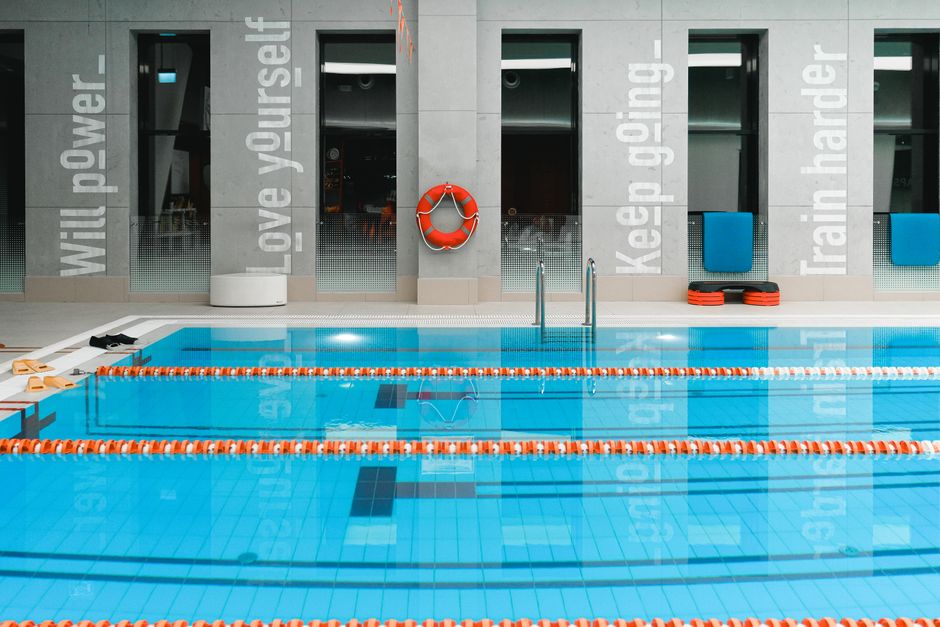
Choose a supervised pool with lifeguards and clearly marked depths. Ask staff which session suits your swimming ability. A quiet recreational session may be more comfortable than a busy lane session when you are returning after a break.
If you cannot float comfortably, regain your footing and reach the side reliably, start with adult swimming lessons. Fitness goals can wait while you learn those essential skills. Having a friend nearby can make the visit more enjoyable, but it does not replace lifeguard supervision or qualified instruction.
Keep this approach to a familiar swimming pool. Open water brings different hazards, including changing conditions and difficult exits, and needs separate preparation. Being comfortable swimming lengths indoors does not establish readiness for swimming outdoors.
Choose a stroke you can sustain
Front crawl
Front crawl combines alternating arm movements, a flutter kick and body rotation. Coordinating your breathing may be harder than moving your limbs. If you keep lifting your head or rushing to find air, shorten the distance and slow down. An instructor can help you organise the breath within the stroke.
Backstroke
Backstroke keeps your face out of the water, which some swimmers find comfortable. You still need to manage direction and know when the wall is approaching. Learn how to use overhead flags and other pool markers with an instructor, and stay aware of people sharing your lane.
Breaststroke
Breaststroke can feel measured and familiar, but it does not suit everyone equally. Avoid forcing a wide kick or keeping your head lifted throughout the length. If the movement causes knee, neck or back discomfort, stop that stroke and seek advice rather than repeating a painful pattern.
You can begin with one comfortable stroke. There is no requirement to include every style, and butterfly is optional. If changing strokes makes you anxious or disrupts your control, save it for a lesson rather than introducing it while tired.
Use short repeats to organise your workout
Continuous swimming is only one way to structure a session. Short swimming efforts with rests at the wall let you check your breathing and movement before setting off again. A length means travelling from one end of the pool to the other; check the pool size before comparing distances between venues.
- Begin gently. Enter safely and get comfortable in an appropriate area before swimming at an easy effort.
- Choose a manageable distance. Swim only as far as you can while staying in control and reaching a safe resting point comfortably.
- Recover at the wall. Wait until your breathing settles and you feel ready to repeat the effort.
- Repeat with care. Keep the same easy approach, stopping the main part of your session before your technique becomes a struggle.
- Finish calmly. If you feel well, take an easy final swim or move gently in the shallow area before leaving the water.
Your first session might include plenty of rest. That gives you useful information about your starting point. The aim is a repeatable experience, not a distance you can complete only by becoming distressed or exhausted.
Keep breathing comfortable
Fitness from another activity does not automatically make swimming feel easy. Coordinating breathing with a stroke is a separate skill. Choose an effort that lets you remain organised in the water and recover comfortably at the wall.
Breathe normally while resting. Do not use prolonged breath-holding, underwater distance challenges or rapid, repeated deep breathing before submerging as workout drills. If you become panicked, stop and use the nearest safe support; signal for help if needed. Ask a swimming instructor for help when breathing technique limits your confidence.
Progress through control before distance
Notice what changes as you get tired. You might kick frantically, tense your hands or hurry each breath. Choose one simple technique cue from an instructor and practise it over a comfortable distance. Trying to correct everything at once can make swimming feel unnecessarily complicated.
Once several visits feel manageable, adjust one part of the session. You could add another repeat, extend a swimming segment or shorten a rest slightly. Leave the other parts comfortable so you can judge how the change feels. Return to an easier session when you feel unusually tired.
Equipment is optional. Kickboards change your swimming position, and hand paddles increase demand on your arms and shoulders. Ask an instructor how to use an aid appropriately before adding it. A simple session without accessories can still involve your whole body.
Make the pool visit practical
- Choose a lane suited to your pace and check its swimming direction.
- Follow the pool rules for passing and resting at the wall.
- Wear secure swimwear and comfortably fitting goggles.
- Keep drinking water accessible where permitted.
- Walk on wet surfaces and use handrails when needed.
Allow enough time to rinse off, dry yourself and change without rushing. Pack what you need before leaving home. A convenient session you can attend regularly is more useful than an ambitious plan that makes every visit difficult.
Get advice when you need it
If you have a health condition, an injury, are pregnant or are unsure about starting exercise, speak with your GP or an appropriately qualified professional. Ask which swimming movements and levels of effort suit your circumstances. Water support does not make every stroke appropriate for every person.
Stop exercising and alert the lifeguard if you develop chest pain, dizziness, unusual breathlessness or feel unwell. Seek urgent help for severe symptoms. For ordinary sessions, finish with enough energy to leave the pool safely. Comfortable recoveries and controlled movement give you a sensible foundation for your next visit.