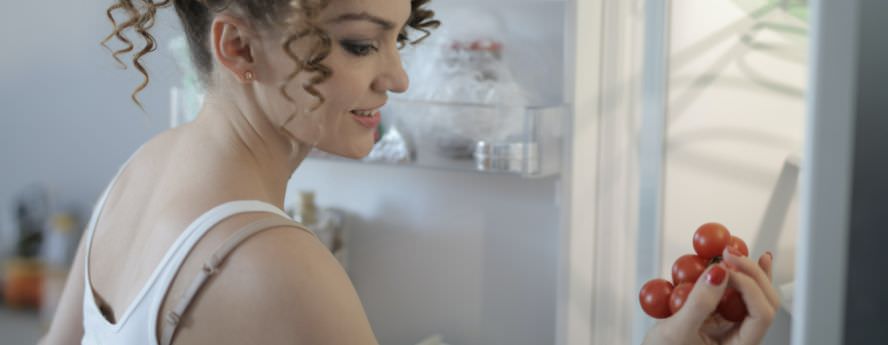
Your refrigerator runs at around 35–38°F — cold enough to slow bacterial growth. That same temperature destroys the flavor compounds in tomatoes, converts potato starch into sugar, and stops an unripe avocado from ever reaching edibility. The fridge is one of the most useful tools in the kitchen. It’s also responsible for some of the most damaging food storage mistakes people make every single day.
Here are 10 foods where cold storage is the wrong call — and what to do instead.
The Cold Chemistry: Why Refrigeration Damages Certain Foods
Refrigeration works by slowing microbial activity. That’s ideal for raw meat and dairy. But for a lot of produce and pantry goods, those same cold temperatures trigger completely different chemical reactions — ones that degrade texture, kill flavor, and shorten shelf life instead of extending it.
Chilling Injury: What Happens to Warm-Climate Produce Below 50°F
Tomatoes, bananas, avocados, and cucumbers are all native to warm climates. Their cell membranes didn’t evolve to handle temperatures below 50°F. When these foods drop into fridge territory, a process called chilling injury begins. Cell membranes lose integrity. Water leaks out. The result is mushy texture, brown or pitted skin, and flavor that lands flat and watery — even after you let the food come back to room temperature for an hour.
Tomatoes are the clearest example. At 55°F and above, they retain volatile aromatic compounds — the molecules responsible for that sharp, complex smell. A 2016 study published in the Proceedings of the National Academy of Sciences found that tomatoes stored below 54°F showed dramatically reduced expression of genes linked to flavor production. They still looked red. They just tasted like cardboard.
Retrogradation: Why the Fridge Turns Bread Stale Faster
Bread staling isn’t just drying out. It’s a structural change called retrogradation, where starch molecules recrystallize as they cool. This process happens roughly 6x faster at refrigerator temperatures (around 40°F) than at room temperature. It also happens more slowly at freezer temperatures — which is why freezing bread works fine. Refrigerating it is exactly the wrong middle ground.
A loaf you bought Monday will feel stale and rubbery by Wednesday if stored in the fridge. Left on the counter in a bread box, it stays fresh through Thursday or Friday with acceptable texture.
Moisture Absorption in Dry Goods
Coffee beans and ground coffee are porous. They absorb moisture from the air, and refrigerators cycle moisture constantly — especially every time you open and close the door. Each time a bag of coffee comes out of the fridge, condensation forms on the surface of the beans. That moisture accelerates oxidation and strips out the aromatic compounds you’re paying for. The same principle applies to dried spices stored in cold environments — they lose potency faster in the fridge than in a cool, dark cabinet.
Fruits and Vegetables That Cold Temperatures Actively Wreck
Four common produce items lose serious quality in cold storage. The damage isn’t subtle — it’s measurable in flavor, texture, and how long the food actually lasts.
| Food | What the Fridge Does | Ideal Temp | Best Storage Spot | Shelf Life (Properly Stored) |
|---|---|---|---|---|
| Tomatoes | Kills flavor compounds, causes mealy texture | 55–70°F | Countertop, stem-side down | 5–7 days once ripe |
| Avocados (unripe) | Stops ripening completely, causes blackening | 65–75°F | Countertop until ripe | 3–5 days to ripen |
| Bananas | Cell damage, skin turns black within 24 hours | 60–70°F | Countertop, away from other fruit | 5–7 days at yellow stage |
| Onions | Humidity causes mold, soft spots, and odor transfer to other foods | 45–55°F | Cool, dark, ventilated pantry | 2–4 weeks |
One important nuance here: a fully ripe avocado you won’t eat for another two days should go in the fridge. Cold storage slows the process at that point, which works in your favor. An unripe avocado in the fridge just freezes in time — it never finishes ripening and develops a watery, off-putting texture instead. Cut avocados always belong in the fridge, ideally with the pit left in and wrapped tightly in plastic wrap or beeswax wrap.
Bananas are a case study in cold-induced cell damage. The black skin you get after a night in the fridge isn’t cosmetic — it reflects actual cellular breakdown. The flesh often remains edible, but the texture goes mushy and the flavor turns flat. Keep bananas on a hook or stand, away from apples and pears, since bananas emit ethylene gas that speeds up the ripening of everything nearby.
Onions and garlic are often stored together, but they shouldn’t share a drawer. Onions need ventilation — a mesh bag or open basket in a dark cabinet works well. Keep them away from potatoes, which release moisture and gases that speed onion spoilage significantly.
Three Pantry Staples You’re Refrigerating by Mistake
These three foods suffer a specific kind of cold-storage damage that’s easy to miss. The food looks fine until you cook or taste it — and by then you’ve already lost days of shelf life.
- Potatoes: Cold temperatures convert potato starch into simple sugars. This changes the flavor (noticeably sweeter than it should be) and creates a separate concern. When cold-stored potatoes are cooked at high heat, the excess sugar reacts with amino acids to produce acrylamide at higher concentrations than potatoes stored at room temperature. The FDA has flagged acrylamide as a potential health concern in cooked starchy foods. Store potatoes in a paper bag or open basket in a dark pantry between 50–65°F, away from onions. Stored this way, they keep for 3–5 weeks without sprouting.
- Garlic: Whole garlic heads refrigerated in a humid environment go rubbery within a week and sprout rapidly. The humidity in most home refrigerators triggers mold growth on unpeeled garlic within 10–14 days. At room temperature in a ventilated container — like a ceramic Emile Henry Garlic Keeper (~$30) — a whole head lasts 3–5 months. That same head in the fridge lasts two weeks, maybe less. Once garlic is peeled or minced, refrigerate it in a sealed container and use it within 3–5 days. That’s the right line: whole heads stay out, cut garlic goes in.
- Bread: A loaf of Dave’s Killer Bread or Pepperidge Farm Farmhouse White stored in the fridge will taste stale and dense within two days. On the counter in an OXO Good Grips Bread Box (~$30), that same loaf stays genuinely fresh for 4–5 days. The OXO design isn’t completely airtight — intentionally — which prevents moisture buildup that causes mold while still blocking enough air to slow staling. If you won’t finish a loaf within three days, slice it and freeze it. Toast slices directly from frozen. The result is better than anything that spent a week in the fridge.
Coffee and Olive Oil in the Fridge: Just Don’t
Coffee beans are porous and absorb refrigerator odors within hours of exposure. Olive oil solidifies and turns cloudy below 50°F — it re-liquefies at room temperature, but repeated thermal cycling degrades the polyphenols that give quality extra virgin olive oil its health benefits and distinct flavor. Both belong in airtight, opaque containers at room temperature, away from heat. For coffee, the OXO Good Grips Airtight POP Coffee Container (~$20) removes oxygen and blocks light. For olive oil, a dark cabinet away from the stove is the complete solution — no specialty container needed beyond a dark glass bottle.
Honey Doesn’t Need the Fridge — And the Science Is Clear
Raw honey may be the single most refrigerator-inappropriate food on this list. People refrigerate it out of reflex, not necessity. It has an indefinite shelf life without cold storage, and cold storage actively makes it harder to use.
Why Honey Is Self-Preserving
Honey’s chemistry is hostile to microbial growth by design. Its water content sits around 17–20%, which is too low for bacteria or mold to survive. Its pH ranges from 3.2 to 4.5 — acidic enough to inhibit most pathogens. Bees also introduce an enzyme called glucose oxidase that produces trace amounts of hydrogen peroxide as a metabolic byproduct. These three factors together — low moisture, high acidity, and natural antimicrobials — make honey shelf-stable for years without intervention. Archaeologists found 3,000-year-old honey in Egyptian tombs that was still technically edible.
Brands like Bee Keeper’s Naturals Raw Honey (~$20 for 11.6 oz) and Trader Joe’s Organic Raw Honey (~$7 for 16 oz) don’t include “refrigerate after opening” instructions for a reason. It’s not an oversight — the product simply doesn’t need it.
What Cold Does to Honey
Refrigerating honey accelerates crystallization. Glucose precipitates out of solution faster at lower temperatures, turning smooth liquid honey into a thick, grainy paste that barely pours. Crystallized honey isn’t ruined — a gentle water bath at 95–100°F brings it back — but refrigeration is the thing causing the problem. Store honey in any airtight glass jar at room temperature. Ball mason jars work perfectly and cost about $1 each. Away from heat and sunlight. That’s the complete formula.
Where These 10 Foods Actually Belong
Can any of these foods ever go in the fridge?
Yes — with specific conditions. A ripe avocado you won’t eat for 48 hours should go in the fridge unwrapped (it’ll hold another 1–2 days). Cut tomatoes belong in the fridge and should be used within two days. Peeled or minced garlic keeps in a sealed container in the fridge for up to 5 days. Sliced onions stay refrigerated in an airtight container for up to a week. All the guidelines above apply specifically to whole, uncut versions being stored over normal timeframes. The rule isn’t “never refrigerate these” — it’s “don’t start there.”
What containers actually extend shelf life here?
- Coffee: OXO Good Grips Airtight POP Coffee Container (~$20). Removes oxygen, blocks light, one-push seal. For whole beans bought in bulk, this is a meaningful upgrade from the original bag with a rubber band around it.
- Bread: OXO Good Grips Bread Box (~$30). Maintains consistent humidity without sealing in moisture that causes mold. Bamboo versions from other brands work similarly — the key is a lid that isn’t completely airtight.
- Garlic: Emile Henry Garlic Keeper (~$30). Ceramic walls block light; perforated lid allows airflow. Worth it if you cook with garlic more than twice a week.
- Potatoes: A paper bag in a dark cabinet. No specialty product outperforms this for whole potatoes. Paper breathes; plastic traps moisture and accelerates rot.
- Honey: Any clean glass jar with a tight lid. Ball mason jars at ~$1 each are the practical answer — no need to spend more.
- Onions: A mesh produce bag or small open basket in a cool, dark cabinet. Keep away from potatoes.
What about olive oil — does the bottle actually matter?
More than most people realize. Light degrades olive oil faster than temperature does. Bertolli Extra Virgin Olive Oil and Kirkland Signature Extra Virgin Olive Oil (Costco, ~$18 for 2 liters) both come in dark glass or opaque tins — that packaging decision is deliberate. If you transfer oil to a clear glass bottle for aesthetics, keep it in a closed cabinet. Heat from a nearby stove is also a major driver of rancidity; a cabinet on the opposite side of the kitchen from your burners can add months to an open bottle’s usable life. Room temperature, dark storage, away from the stove: that’s the complete system for olive oil, and it costs nothing extra.
The same pattern runs through all 10 of these foods. Refrigeration became the default storage choice for almost everything as fridges entered common households in the mid-20th century — not because cold was always optimal, but because it was available and convenient. Most plant-based foods and shelf-stable goods were stored successfully for centuries before mechanical refrigeration existed. Temperature stability, darkness, and low humidity solve more food storage problems than cold does. As food science gets better at communicating this, the blanket “when in doubt, refrigerate” rule is going to keep shrinking — and these 10 foods are exactly where that correction starts.
Medical Disclaimer: This content is for informational purposes only and does not constitute medical advice. Always consult a qualified healthcare professional before making health-related decisions.