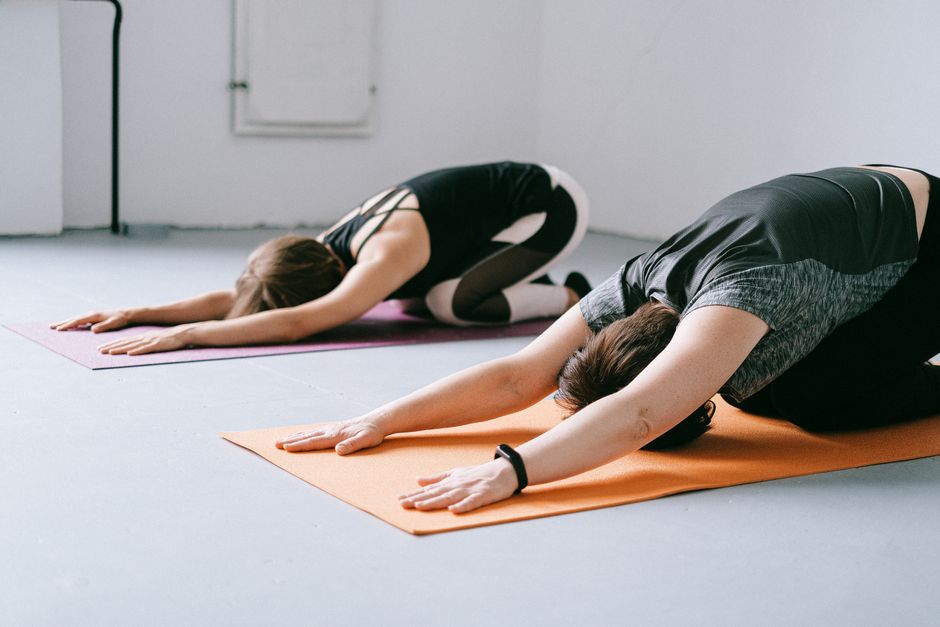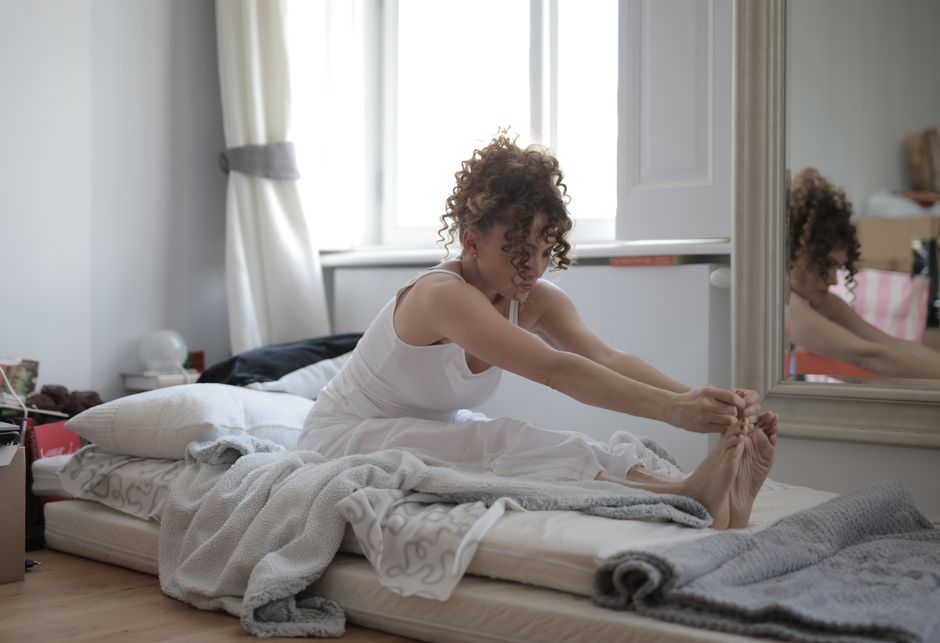
Gentle stretches can give your morning a little room to breathe. You do not need to touch your toes, get onto the floor, or complete a demanding routine before breakfast. Start by moving around at an easy pace, then choose a few comfortable stretches. Think of this as a gradual transition from bed to everyday activity, with no flexibility target to chase.
Set yourself up before you stretch
Get out of bed slowly and pause before walking, especially if standing sometimes makes you lightheaded. Once you feel steady, walk around your room or along a hallway. Let your arms swing naturally. Take enough time to feel ready for a little more movement rather than going straight into a deep stretch.
Find a clear space with secure footing. A firm chair without wheels and a clear wall provide useful support. Check that the chair cannot slide, and move loose rugs out of your way. Avoid slippery socks. You can keep this entire session upright or seated, so there is no need to prepare a space on the floor.
If you have a health condition, an injury, are pregnant, or are unsure about starting a new exercise routine, ask your GP or a qualified exercise professional for advice first. Follow any individual movement restrictions you have been given. These general suggestions should fit around that advice.
Use comfort as your guide
Look for mild tension in a muscle rather than a strong pulling sensation. You should be able to breathe normally and keep your face and hands relaxed. Start with a small range of movement. If it feels comfortable, explore a little farther, but remember that reaching farther is optional.
A few easy breaths are a useful starting point for a held stretch. Release slowly, pause, and change sides where relevant. Your sides may feel different; do not force them to match. Leave out any movement that feels awkward or painful.
- Move smoothly and avoid bouncing.
- Keep breathing without holding your breath.
- Use support whenever you want more stability.
- Stop if you notice sharp pain, tingling, numbness, or dizziness.
A simple sequence beside a chair
Try these movements in order, or pick two or three for a shorter morning session. Keep your chair nearby for standing movements. Take seated pauses whenever you need them, and allow yourself to skip a stretch without replacing it with something harder.
1. Shoulder rolls and a gentle forward reach
Sit with both feet on the floor and your arms resting loosely at your sides. Slowly lift your shoulders a little, move them back, and let them settle down. Repeat a few times, keeping the circles small and comfortable. Avoid pushing through any uncomfortable catching sensation.
Next, bring your hands forward below shoulder height. Reach gently away from your chest, allowing a little space between your shoulder blades. Keep your head comfortably above your shoulders instead of dropping your chin hard towards your chest. Take a few relaxed breaths, then lower your arms.
2. A small seated side stretch
Keep both sitting bones on the chair and your feet planted. Rest one hand on the side of the seat. Raise your other arm only as high as feels comfortable, then lean slightly towards your supporting hand. Think about reaching upwards before moving sideways.
A small lean may be enough to feel mild tension along your side. Avoid twisting or lifting one hip to travel farther. Return slowly to the middle, rest, and change sides. If raising your arm bothers your shoulder, keep that hand at your waist and make a smaller movement.
3. An easy chest opening
Stay seated with your hands resting on your thighs. Gently bring your shoulders back and let your chest lift a little. Keep your lower ribs relaxed so that the movement does not turn into a large arch through your lower back. Look ahead and breathe normally.
You do not need to clasp your hands behind your back or squeeze your elbows together. Let the movement stay modest. After a few comfortable breaths, release fully and allow your shoulders to return to their natural resting position.
4. A seated stretch for the back of your thigh
Sit securely on the chair and extend one leg with its heel on the floor. Keep a slight bend in that knee. Rest your hands on your bent leg for support, then tip forward a little from your hips with your back comfortably long.
Stop when you notice mild tension along the back of your extended thigh. Reaching for your toes is unnecessary. Ease upright before changing legs. If you feel discomfort behind your knee or in your back, shorten the movement or leave this stretch out.
5. A supported calf stretch
Stand facing a wall with your palms resting against it. Step one foot back and keep your feet about hip-width apart, rather than placing them on a narrow line. Point both feet towards the wall and bend your front knee slightly.
Keep your back heel comfortably grounded while leaning towards the wall. You may notice a gentle stretch in your back calf. Bring the back foot closer if the position feels too strong. Step forward slowly, pause until steady, and switch legs. Keep your hands supported throughout.
6. Finish with easy ankle movements
Sit down with both feet on the floor. Keep your heels grounded while slowly lifting and lowering your toes a few times. Then keep your toes down and gently lift and lower your heels. Stay within an easy range without forcing your ankles.
Let both feet settle, take a normal breath, and pause before standing. This is a simple way to finish gradually rather than hurrying from a stretch straight into your next task.
Choose what fits your morning
On a busy morning, shoulder rolls, a side stretch, and ankle movements may be plenty. With more time, you can work through the full sequence and rest between positions. If you prefer to stay seated, leave out the calf stretch. There is no need to complete every movement for the session to count.
Notice how you feel afterwards and later in the morning. If one stretch leaves you sore or uncomfortable, leave it out next time and seek advice about a suitable alternative if needed. Persistent, worsening, or unexplained morning stiffness deserves a conversation with your GP rather than increasingly forceful stretching.
Keep the routine gentle
If you plan to run, lift weights, or do another workout afterwards, use a gradual warm-up suited to that activity too. A few held stretches do not provide preparation for every kind of exercise. Let this sequence serve its own simple purpose: making space for comfortable movement at the start of your day.
You might stretch after opening the curtains or before getting dressed. Choose a moment with enough room to move without rushing. Keep the sequence short enough to suit your schedule, and finish while the movements still feel relaxed.