You do not need a spare room to practise bodyweight exercises. A clear patch of floor and a suitable wall can give you enough space for controlled movements that stay in one place. The useful question is which exercises you can perform comfortably without bumping furniture or rushing between positions.
This guide focuses on making movements fit a small home: checking your available space, choosing compact exercises and arranging them into a simple session. You can keep everything standing or include floor exercises if getting down and back up feels comfortable.
Check your movement space before you begin
Stand where you plan to exercise and slowly reach forwards, sideways and overhead. Then try a small squat and a step backwards. Check for lamps, shelves, ceiling fans and furniture corners. Your space needs to accommodate your moving body, not just your feet.
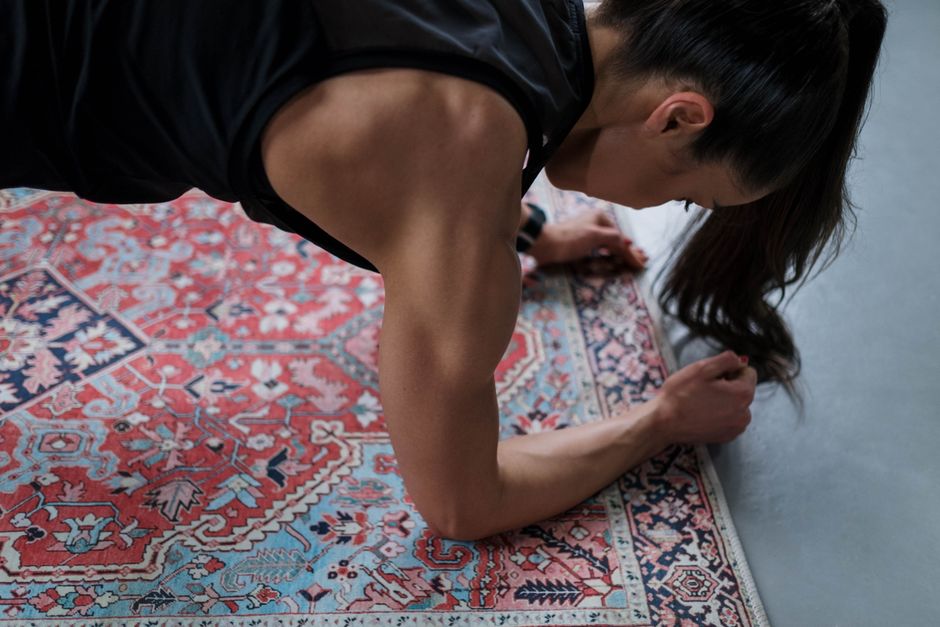
- Move loose rugs, cables and small objects out of the way.
- Choose a dry, level surface with reliable grip.
- Keep doors and walkways clear, and tell other people you are exercising.
- Keep pets away from your feet and any floor exercise area.
- Use a solid wall for support; avoid glass, doors and movable partitions.
If you use a chair, choose a sturdy one without wheels and place it against a wall so it cannot slide backwards. Avoid folding chairs, soft beds or furniture that rocks. Wear clothing that lets you move freely and footwear suited to the floor.
Choose movements that stay within your footprint
Jumping, travelling lunges and wide arm swings are optional. Compact exercises can use a smaller range, a wall or a slower pace. Before starting, gently march in place, roll your shoulders and rehearse shallow versions of your chosen movements. Give yourself time to feel ready.
If you have a health condition, an injury, are pregnant or are unsure about starting exercise, ask your GP or a qualified exercise professional for individual advice. Stop if a movement causes pain. Chest pain, faintness or unusual breathlessness mean you should stop and seek appropriate medical help.
Controlled squat or chair sit-to-stand
Stand with your feet roughly hip-width apart, adjusting slightly until the position feels comfortable. Bend at your hips and knees, sending your hips backwards as though approaching a seat. Lower only as far as you can control, then press through your feet to stand. Let your knees follow the direction of your toes.
For a clearer target, sit down gently onto a sturdy chair and stand again. Avoid dropping onto the seat or throwing your body forwards. You can use your hands for assistance if needed. Leave enough clear space in front of the chair for your torso to lean forwards naturally.
Wall push-up
Face a solid wall and place your palms against it around shoulder height and shoulder-width apart. Step back a little, keeping your feet secure. Bend your elbows to bring your chest towards the wall, then push away smoothly. Keep your body in a comfortable line without letting your lower back sag.
Start close to the wall. Moving your feet farther away increases the challenge, but only do so while your hands and feet stay secure. Let your elbows angle naturally rather than forcing them straight out to the sides. Check that your face will not approach a picture frame or shelf.
Standing hip hinge
Stand with your knees slightly bent and your hands resting on your hips. Move your hips backwards while tipping your torso forwards, keeping your back in a comfortable, steady position. Stop before you need to round your back, then return to standing. Think of folding at the hips rather than reaching towards the floor.
This movement needs some clear space behind you. Practise with a small range first and keep your neck comfortably aligned with your torso. You do not need to touch your toes or lean deeply for the movement to be useful practice.
Supported calf raise
Stand facing a wall, with your fingertips resting lightly against it. Slowly lift your heels so your weight moves towards the balls of your feet, then lower with control. Keep your movement vertical rather than rocking forwards. Use both feet and keep the range modest at first.
A level floor is enough; there is no need to balance on a step edge. If you find yourself gripping the wall or wobbling, make the lift smaller and take a pause between repetitions.
Add floor exercises only if your room allows
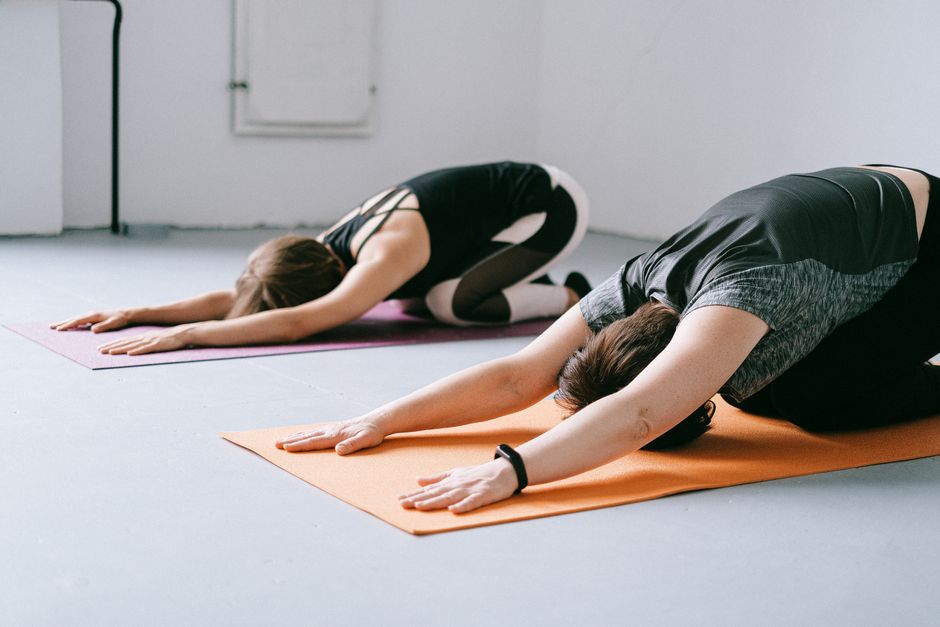
Lie down briefly to check the available floor length before choosing these movements. You should have room for your head, arms and legs without touching furniture. Any padding should stay flat and resist slipping. Keep a standing-only session if floor transitions are awkward.
Glute bridge
Lie on your back with your knees bent and feet flat on the floor, roughly hip-width apart. Rest your arms beside you. Gently press through your feet and lift your hips to a comfortable height, then lower slowly. Avoid pushing into a large arch through your lower back.
Keep the lift small if that helps you stay controlled. Breathe throughout and stop if you feel discomfort. Make sure your head has clear space and that no furniture edge sits above it.
Hands-and-knees arm reach
Start on your hands and knees, with your hands under your shoulders and knees under your hips. Slowly slide one hand forwards along the floor, or lift it slightly if comfortable, then return it. Alternate sides while keeping your torso steady and breathing normally.
You only need room for the reach you choose. Keep it short if a wall is nearby. If your wrists or knees find this position uncomfortable, leave it out and choose a standing movement instead.
Put together a session with fewer transitions
Arrange your exercises by location so you can concentrate on moving. Complete the standing movements first, then move to the floor once if you want to include it. You do not have to alternate standing and lying down to make a session worthwhile.
- Begin with gentle movement and a few easy practice repetitions.
- Try four to eight controlled repetitions each of the squat, wall push-up, hip hinge and calf raise.
- Rest between exercises until you feel ready to continue comfortably.
- Add a few bridges and arm reaches if floor work suits you.
- Finish there, or repeat the sequence if your technique still feels steady.
Treat these numbers as an example, not a requirement. Start with fewer repetitions when needed. Finish each exercise while you could still do a few more comfortably, and let your breathing settle before changing position.
Make progress without taking up more room
Once the movements feel familiar, change one thing at a time. You might add a repetition, lower more slowly or pause briefly in a comfortable position. Increasing depth is optional and should never mean forcing a joint or losing control.
A short note about which variations felt comfortable can help you choose your next session. On a tired day, use the easier version or do less. Keep your space clear, your movements deliberate and your routine simple enough to repeat in the room you actually have.