Dark evenings can make your usual outdoor exercise less appealing. Indoor cardio gives you another option when daylight has gone and you would prefer to stay under a roof. The useful question is which activity fits the evening you actually have: a quiet flat, a shared living room, or enough time to visit a leisure centre.
You do not need to recreate an outdoor run indoors. Choose an activity you can do comfortably, then adjust its pace and length to your experience. These ideas focus on finding a practical evening option without turning your home into a gym.
Choose your setting first
Think about noise, floor space and whether you want to stay home. A bouncing routine may be awkward above a neighbour’s bedroom. Movements that travel across the room may clash with furniture. Going to an indoor venue might suit you better if home makes it difficult to switch away from work.
- For a quiet home: consider marching, controlled side steps or a stationary cycle if you already have access to one.
- For shared space: choose movements that stay within a clear patch of floor and pause easily.
- For a change of scene: look into an indoor walking venue or a beginner cardio class.
- For a tired evening: start easily and decide whether to continue once you have settled in.
If you have a health condition, an injury, are pregnant, or are unsure about starting exercise, ask your GP or a qualified exercise professional for guidance suited to you.
Make walking work indoors
If you have a clear route, walk steadily along it and make unhurried turns. Avoid tight, repeated pivots. Where space is limited, alternate marching on the spot with a few steps forwards and backwards. Keep your movements small enough to stay controlled and look ahead rather than down at your feet.
Let your arms swing naturally. Start easily, then pick up the rhythm if it feels comfortable. Change the pattern occasionally: march, walk along your route, return to marching, then slow down. There is no need to lift your knees high or stamp. A steady, familiar pattern can be easier to maintain than frequent changes.
A public indoor walking space can offer more room. Check opening times, access arrangements and whether recreational walking is permitted. Stay aware of entrances, other people and changes in floor surface. Keep your pace considerate in shared public spaces and avoid weaving around others.
Mix simple standing patterns
For variety at home, combine a few straightforward movements. The aim is a continuous, manageable rhythm rather than a strength circuit or complicated choreography. Keep one foot on the floor and choose a range of movement you can control. Return to marching whenever you want a simpler pattern.
Side steps
Step sideways, bring the other foot towards it, and repeat in the opposite direction. Begin with small steps. Once the pattern feels easy, add a relaxed arm swing below shoulder height. Leave enough room to both sides and avoid dragging your feet across the floor.
Heel digs and toe taps
Place one heel lightly forwards, return it, and change feet. Alternatively, tap a toe gently in front or to the side. Keep most of your weight over your standing leg. Avoid reaching so far that you lean or lose balance, and reduce the movement if coordination becomes difficult.
Gentle shadow boxing
From a comfortable stance, make light, controlled punches into the air in front of you. Keep your elbows slightly soft. Avoid snapping your arms straight, twisting forcefully or holding weights. Add easy marching only if coordinating both movements feels secure. Use this as a brief change rather than a reason to rush.
Use equipment you already have access to
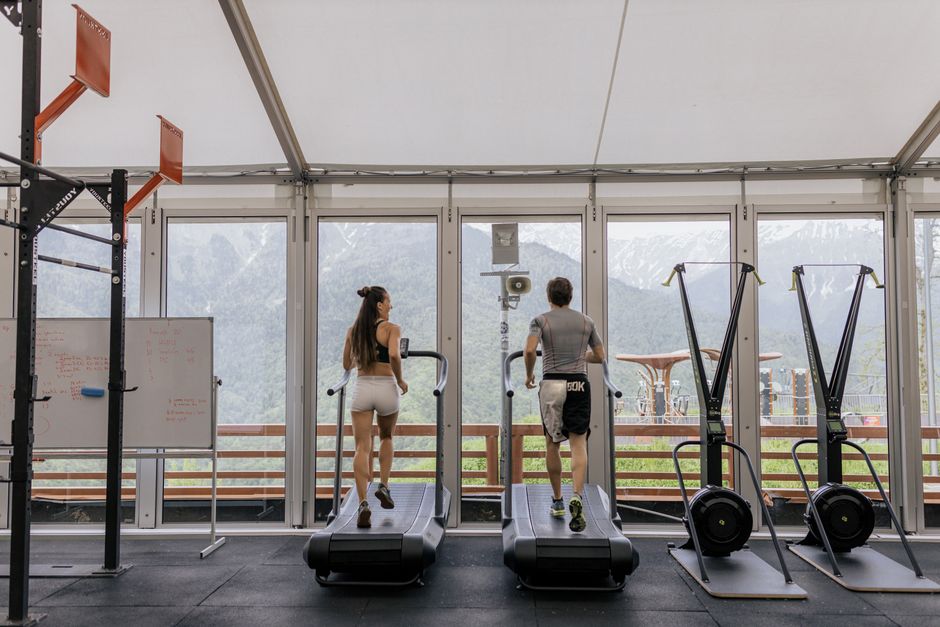
A stationary bike or treadmill can make an indoor session straightforward, but buying equipment is not a requirement. If you use a machine at home or at a leisure centre, learn the controls before increasing the pace. Ask staff to explain unfamiliar equipment and help with adjustments.
On a stationary bike, choose a comfortable riding position and light resistance initially. Pedal smoothly rather than pushing against a setting that makes you rock from side to side. On a treadmill, begin at a slow walking speed, use its safety features as instructed, and stop the belt before stepping off.
Keep towels, clothing and cables away from moving parts. Children and pets need to stay clear while a machine is operating. A screen or podcast can make steady movement more enjoyable, provided it does not distract you from your footing or the controls.
Consider an indoor session away from home
If your living space feels crowded, an organised activity may be easier to enjoy. Look for beginner sessions with clear descriptions of pace and experience level. General aerobics or an easy stationary cycling class may offer options, provided you can adjust your effort and take breaks.
Tell the instructor if you are new and ask how to simplify unfamiliar movements. You do not have to follow every change immediately. Staying with an easier pattern is reasonable while you learn. Include travel and changing time when deciding whether a session fits your evening.
Keep the effort adjustable
Begin with a few minutes of easy movement. At a moderate effort, you should generally still be able to talk, although your breathing may be quicker. If speaking comfortably becomes difficult, reduce the pace. You do not need to chase sweat or a number on a watch.
- Start with easy walking or marching.
- Choose one main activity and settle into a comfortable rhythm.
- Alternate with an easier movement whenever you need a breather.
- Finish by gradually slowing down.
Stop if you develop pain, dizziness or feel unwell. Chest pain, fainting or severe or unusual breathlessness need urgent medical attention. Do not try to complete a routine through concerning symptoms.
Prepare the room for movement
Turn on enough light to see the floor clearly. Move loose rugs, toys and trailing cables out of your route, and check that the floor is dry. Choose secure footwear appropriate to the surface; socks alone can slide on smooth flooring. Leave clearance around your arms as well as your feet.
Keep water nearby and allow ventilation if the room feels stuffy. Position any video where you can see it without repeatedly turning your neck. Preview unfamiliar sessions so sudden jumps or floor transitions do not catch you out. Keep the volume low enough to remain aware of your surroundings.
Leave room for the rest of your evening
Choose a stopping point that leaves time to change and settle into whatever comes next. If a demanding late session leaves you too alert at bedtime, try an earlier slot or an easier pace. Notice what works for your routine without forcing every evening into the same pattern.
Keep two familiar options available: a quiet home session and an indoor alternative outside the house. When darkness changes your plans, choose between them based on your space, energy and time. A manageable session that fits your evening is a useful option to have ready.