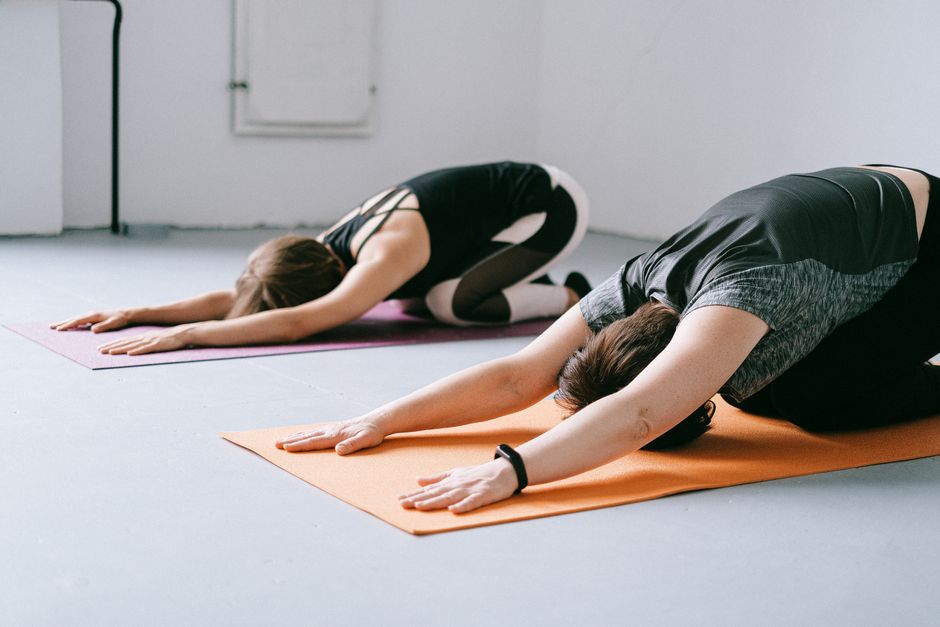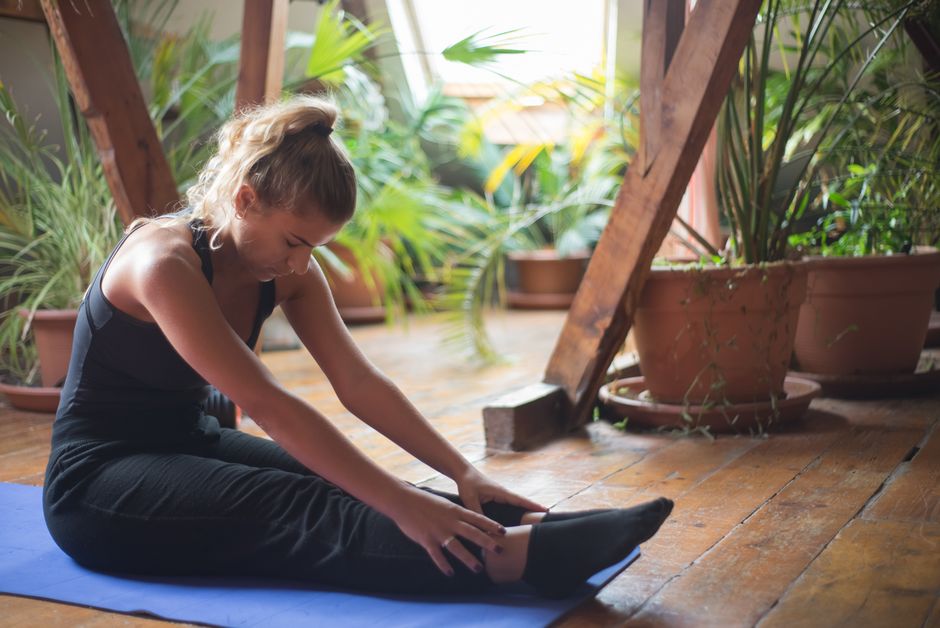
Posture exercises offer a chance to explore how you sit, stand and move during ordinary tasks. The aim is not to hold yourself in one carefully arranged position all day. It is to practise comfortable movement, notice unnecessary effort and give yourself more options when a position starts to feel tiring. This routine focuses on gentle control and everyday transitions, rather than deep stretching or a demanding workout.
Think of posture as something that changes
Your posture naturally changes when you read, cook, walk or reach into a cupboard. There is no need to keep your shoulders pulled back or your stomach tightly braced through every activity. A position that feels comfortable for a short task may become tiring when you stay there for a long time.
Use these exercises as opportunities to move with attention, rather than checks of whether your body looks correct. You do not need to look symmetrical in a mirror or flatten every curve in your spine. Choose a range of movement that feels easy to control, and allow yourself to relax between repetitions.
Set up a comfortable starting point
Choose a clear space, a wall and a sturdy chair without wheels. Wear clothing that lets you move freely. Begin with a little easy walking around the room, or comfortable seated movement if standing is difficult. You should be able to breathe normally throughout the routine.
If you have a health condition, an injury, recent surgery or are pregnant, ask your GP or a qualified physiotherapist about suitable exercises. Seek advice before starting if you are unsure whether these movements are appropriate for you. Follow any individual restrictions you have already been given.
Keep the movements gentle. Stop an exercise if it causes pain, dizziness, tingling or numbness. Do not force a movement to match the description. Persistent or recurring discomfort deserves advice from a qualified professional, rather than repeated attempts to correct your posture yourself.
Practise small movements with control
1. Find an easy seated middle position
Sit on the chair with your feet supported on the floor. If they do not reach comfortably, use a stable foot support. Rest your hands on your thighs and let your shoulders settle.
- Gently rock your pelvis forward a little, allowing your lower back to curve slightly.
- Rock back a little, letting that curve soften.
- Repeat a few small, slow movements without pushing to either extreme.
- Settle somewhere between the two positions where sitting feels easy.
This middle position is a starting point, not a posture you must preserve. Leaning against the chair back is also an option. Notice whether you are gripping your legs or holding your breath, and ease off if you are.
2. Explore a small head glide
Stay seated and look straight ahead at something around eye level. Without tipping your head up or looking down, gently draw your head back a small distance, as though making a subtle double chin. Release to your usual position after a brief pause.
Try three to five easy repetitions. Keep your jaw relaxed and avoid pushing your head back with your hand. The movement can be very small. Skip it if it brings on symptoms or if you find yourself straining to understand the motion; a physiotherapist can help you find an appropriate alternative.
3. Move your shoulder blades without pinning them back
Let your arms hang comfortably by your sides while seated or standing. Slowly move your shoulders a little forward, then gently bring them back towards their resting position. Think of the shoulder blades moving around your ribcage rather than squeezing together forcefully.
Repeat a few times, then let everything relax. Avoid lifting your chest dramatically or arching your lower back to make the movement bigger. The useful practice is being able to move and release, rather than holding a rigid shoulders-back pose.
4. Try a short wall slide
Face a wall and place your forearms against it, with your elbows below shoulder height. Stand close enough that you do not need to lean heavily into your arms. Keep your feet comfortably apart.
- Slide your forearms upwards a short distance.
- Stop before you need to shrug strongly, hold your breath or arch your back.
- Slide down slowly and relax your arms.
- Repeat three to five times if comfortable.
You do not need to reach overhead. A short slide is enough to practise coordinating your arms and trunk. If the wall position bothers your shoulders, leave this exercise out.
5. Rehearse an easy sit-to-stand
Place the chair against a wall so it cannot slide backwards. Sit towards the front with your feet comfortably apart and positioned where standing feels manageable. Lean your torso forward from the hips, then stand up smoothly. Use the chair arms for support if needed.
Pause, then move your hips back and lower yourself slowly to the seat. Start with two or three repetitions. Avoid throwing your shoulders backwards at the top or trying to keep your torso perfectly upright throughout. Leaning forward is a normal part of getting out of a chair.
Carry the practice into ordinary tasks
After the exercises, try one familiar activity and notice your choices. While preparing food, move closer to the work surface instead of reaching from far away. When reading, support the book or your forearms if that feels easier. When carrying something, keep it manageable and reposition your feet to turn.
These are experiments in comfort, not rules for preventing every ache. You can shift your weight, lean on an available support or change how you hold an object. If a task repeatedly causes symptoms, seek individual advice about the task and your circumstances.
A useful cue is, could this feel a little easier? That might mean releasing your shoulders, moving an item closer or changing position. It does not mean constantly inspecting your body or correcting yourself whenever you slouch.
Build a routine that leaves room for variation
Begin with two or three movements that feel straightforward. Do one comfortable round, then return to your day. You can add another exercise once the movements feel familiar, but there is no need to increase repetitions simply because a routine seems short.
- Use a familiar cue, such as finishing breakfast, to remember your practice.
- Choose seated options on days when standing feels less manageable.
- Reduce the range or leave out a movement that feels awkward.
- Keep normal breathing and smooth movement ahead of repetition counts.
Judge the routine by how manageable it feels and whether you are becoming more comfortable changing position. Appearance is not a useful daily score. Comfortable posture practice gives you choices: sitting with support, standing with less effort, reaching within your available range and moving on when a position has had its turn.